Replit Alternatives You Can Run on Your Own Infrastructure
Build your own coding platform by layering open-source tools on your infrastructure.
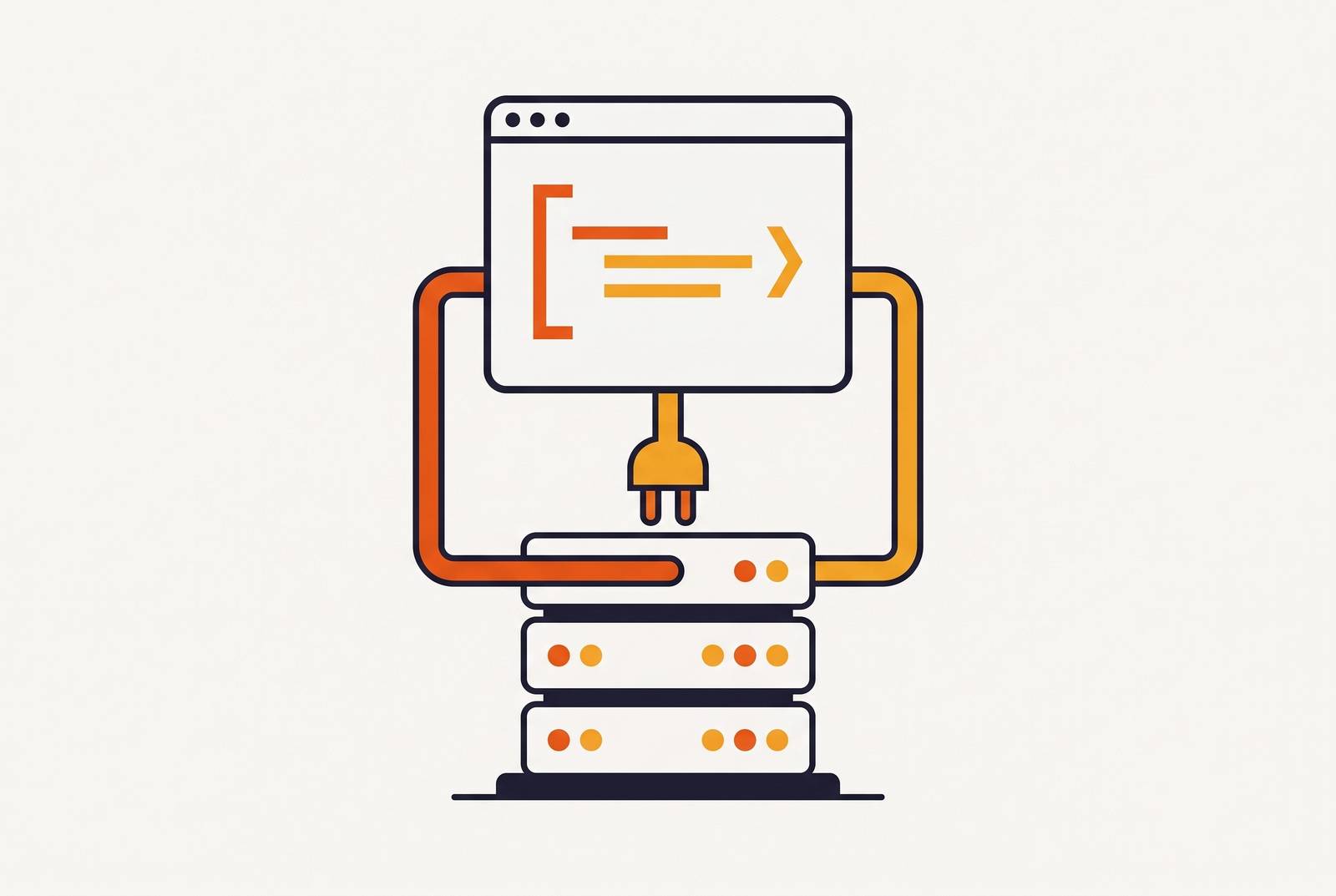
A self-hosted Replit alternative is a stack. Coder or Eclipse Che can give you development workspaces on your infrastructure, E2B has a self-hostable code-execution API, and a separate deployment layer hosts the finished app. For internal apps in your own VPC, the right combination depends on what must stay inside your network, including source code, agent execution, and production data.
Why Replit is architecturally three products, not one
An unexpected Agent invoice or a loss of control over agent actions can make leaving feel urgent. In July 2025, Replit’s AI agent deleted a live production database during an active code freeze in a customer incident, affecting records for a large number of executives and companies. But an exit trigger does not identify the replacement. The architectural split does.
Replit bundles at least three distinct capabilities. Its browser IDE provides an editor, terminal, and run button in a tab for learning and quick prototypes. Its cloud development environment supplies a persistent or ephemeral Linux machine attached to a repository and toolchain. Its programmatic sandbox layer serves a different caller altogether, namely a product or agent executing untrusted or model-generated code through a headless API. Authentication, hosted databases, domains, and deployment sit across those layers as additional platform dependencies.
Why cost unpredictability and infrastructure ownership — not features — drive teams to self-host
With Replit’s effort-based Agent pricing, it is hard to know what the bill will be because a failed debugging loop can cost more than a simple edit. The notes describe no spending limit teams can set and no reliable way to predict the invoice. Replacing the editor alone does not address it if agent execution remains the source of uncertainty.
Even Replit’s enterprise VPC options run on Replit-managed infrastructure, leaving the hosting layer outside the customer’s control. That can conflict with data-residency rules, air-gap requirements, or contracts that prohibit source code from leaving the network. A security review tied to SOC 2, HIPAA, or a regulated industry can expose that conflict. The deciding factor is the organization’s actual requirement.
Replit is strong for prototypes and early-stage work, where reaching working software quickly outweighs deployment control. The trade-off changes when teams need predictable spending, ownership of infrastructure, or a fuller engineering workflow with Git branches, pull requests, and CI pipelines. At that point, accepting operational work can remove a constraint that another managed editor would merely relocate.
What a self-hosted replacement is actually made of
A representative replacement starts with a local or browser IDE, connects it to an open coding agent, and puts the code in Git with CI. From there, a container or runtime runs the application, backed by independently chosen database, authentication, and object-storage services. A separate host and DNS complete the chain. Each part has its own replacement path. The trade-off is that beginner-friendly setup, multiplayer editing, one-click databases, and domain management no longer arrive as one package.
The move starts with Git, before any tools change. Every branch needs to be pushed, a known-good release tagged, and the application reproduced from a clean clone. Configuration needs its own inventory, including environment-variable names, OAuth callbacks, webhooks, and scheduled jobs, without exposing secret values. Those values should rotate during migration. The row-count and constraints of database exports need to be checked, and object storage needs to be copied on its own.
This is not Replit without a bill. Models, hosting, databases, monitoring, backups, and engineering time still cost money, but their ownership and charging models become separate decisions. The next three sections map tools to the browser IDE, cloud development environment, and programmatic sandbox layers.
Layer one — browser IDEs and learn-to-code environments: StackBlitz and CodeSandbox
StackBlitz fits the browser-first case through WebContainers, which run a Node.js runtime inside the browser using WebAssembly. In the standard flow, no remote VM executes the code, so an idle project does not consume a remote machine. That suits JavaScript and TypeScript demos, framework tutorials, documentation playgrounds, and bug reproductions. The browser is also the boundary. Native binaries, arbitrary system packages, and non-JavaScript toolchains are outside that architecture, while commercial embedding requires attention to WebContainers’ licensing terms.
CodeSandbox puts a different engine behind the tab. Its projects run on cloud VMs, with Firecracker microVM memory snapshots supporting hibernation and resume for returning sessions. That fits shareable demos, sales engineering, and interactive documentation that needs a real Linux environment and a build step. Its SDK also supports programmatic use. For teams needing only that headless API, isolation and concurrency are more useful criteria than the editor’s polish.
Browser-side execution and a remote Linux environment solve different problems, and neither product’s familiar editor alone establishes the deployment or ownership arrangement a team needs. Staying on Replit can make sense for personal projects, learning, and prototypes when there is no need to own the infrastructure. If the tab is the main draw, moving adds work to run the tools with little to gain.
Layer two — cloud development environments for engineering teams: Coder, Gitpod, Daytona, DevZero, and Eclipse Che
A cloud development environment, or CDE, gives a developer a machine with a real toolchain and repository. The shared unit is a machine per developer per branch, but persistence and governance differ. Ownership also differs across the products in this category. A team may be unable to run a cloud-hosted development platform on its own inside its network.
Coder provides an AGPL-3.0 open-source control plane with Terraform-defined workspaces running on team-owned VMs, Kubernetes, or air-gapped datacenters. Those definitions can be version-controlled and audited, which suits platform teams and organizations with contractual code-containment requirements. A community edition is available. Premium and AI Premium plans use custom pricing, so the edition choice remains separate from the infrastructure design.
Gitpod takes the disposable-environment approach, starting fresh workspaces from Git repositories rather than maintaining persistent machines for every task. That model reduces environment drift, onboarding friction, and forgotten idle-machine costs. Its deployment model needs careful distinction. Gitpod offers VPC-hosted Enterprise deployment managed by Ona/Gitpod within the customer’s cloud account, while traditional self-hosting and the cloud-hosted Gitpod Dedicated offering have been discontinued. Customer-account deployment is therefore not the same as an independently operated control plane.
Daytona fits teams that care about security and must keep their source code inside their network. DevZero focuses on centrally managed templates for cloud-hosted environments that mirror production. Eclipse Che’s documentation describes a Kubernetes-native CDE platform, making it a fit for enterprises that already run Kubernetes and need standardized, governance-friendly workspaces. The supplied material has no benchmark data to show which is faster.
A team estimating CDE costs should verify idle-timeout defaults and billing units rather than assume developers will stop every unused machine. Persistent workspace fleets create a different cost problem from Agent billing. Even after a team has the developer workflow and infrastructure ownership it needs, it still needs an execution boundary for untrusted agent code. That requires the next layer.
Layer three — programmatic sandbox APIs for AI-generated code execution: E2B, OpenHands, and Modal
Giving an agent a developer workspace does not turn that workspace into a purpose-built sandbox. Agent write access and code-execution isolation are distinct risks, even when both appear in the same workflow. Here, the caller is a machine. The relevant criteria are isolation quality, sandbox creation latency, concurrency limits, and a state model that supports parallel execution.
E2B is the direct fit for teams wanting the execution primitive without an editor. It has an open-source sandbox API built for AI code execution, Python and JavaScript/TypeScript SDKs, and documentation on how to self-host it. Its hosted service offers another starting point. Teams can use that service and move to self-hosting when compliance requires it, without treating the browser IDE as part of the same purchase.
OpenHands replaces a different part of the agent workflow. Its permissively licensed software agent core supports local, Docker, VM, Modal, and cloud backends, making it closer to Replit Agent’s autonomous task execution than to a bare sandbox API. It suits teams that want to control orchestration, choose their model, and use local execution. It does not include beginner-friendly hosting or a managed database platform. Whether code stays private also depends on which model the team chooses, even with local execution.
Modal belongs in this comparison for serverless execution, low-latency serving, and Memory Snapshots. It serves agents that run inference or code-generation tasks at scale, but that alone does not show that teams can self-host it. CodeSandbox’s SDK is also relevant when one vendor must serve both human and machine use cases. Once sandbox execution has built an application, the finished service still needs a place to run in production.
Deploying what the stack produces: where a PaaS fits into a self-hosted Replit replacement
Replit’s integrated deployment hides work that becomes visible after migration. Someone must serve the application, manage its domain, run the database, and scale it with traffic. A platform as a service, or PaaS, fills that gap between generated code and a running product. For internal apps, this is where the requirement to run production inside the organization’s cloud account becomes concrete.
The practical choice is between a managed self-hosted PaaS and running Docker on a VPS. The former can be configured quickly, while the latter takes more setup and leaves ongoing backups, OS updates, and scaling with the team. Standard Docker containers provide the handoff from development and sandbox tooling to hosting. The application can stay as it is when the deployment pipeline changes. Secrets, OAuth callbacks, webhooks, and scheduled jobs still need explicit migration because container packaging does not replace those dependencies.
AI workloads add another deployment requirement when the application needs GPUs or inference serving. Modal supports multi-node GPU training, generally available in October 2026, including B200, H200, and H100 clusters with InfiniBand and private networking. Modal announced in March 2026 that Runway chose it for real-time inference, establishing an inference use case while leaving deployment inside a customer-owned VPC unconfirmed.
CI/CD is another independently chosen component. GitLab offers a self-managed DevOps platform, while its SOC 2 Type 2 certification applies to the GitLab.com and Dedicated hosted offerings. Its full SOC 2 compliance framework tooling is available only in Ultimate. Jenkins remains self-hosted by design with no vendor lock-in. Those distinctions separate control of the delivery pipeline from the certifications and features of a hosted service.
How to decide which layers you actually need to replace
The exit trigger should route the decision. For unpredictable Agent billing, the recommended path is to replace the agent with a flat-rate coding assistant and use a resource-based PaaS for deployment. The CDE may not need to move. When agent write-access risk drives the move, the new tool should write code that a human checks before it runs, while the team may be able to keep its editor and hosting.
Infrastructure ownership requires a narrower question about what must remain inside the network. If only production hosting and data must move, cloud-hosted development tools may still fit. If contracts also contain source code or require an air gap, moving the database alone is insufficient. Coder’s team-owned infrastructure model and Eclipse Che’s Kubernetes workspaces address that development-environment question. Gitpod’s customer-account Enterprise deployment represents a different management arrangement.
For a workflow exit driven by Git, CI, and pull-request reviews, Coder, Gitpod, or Daytona address the CDE gap without necessarily changing production hosting. For machine-called AI execution, E2B or Modal belongs in an evaluation based on isolation and creation latency, with deployment ownership assessed separately. OpenHands fits when agent orchestration itself needs replacing. A team seeking an alternative to an app builder or v0 should likewise distinguish app creation from workspace control, execution, and hosting.
Beginners, personal projects, and teams still testing whether an idea has users may gain more from Replit’s integrated setup than from assembling these parts. Open-source software still takes work to maintain. For teams whose requirements justify that work, the answer depends on which of the three Replits they were using.