Self-Hosted PaaS Platforms That Deploy Into Your Own Cloud Account With Managed Migration
Ownership and managed operations split these platforms into two fundamentally different categories.
A self-hosted PaaS that deploys into your own AWS, GCP, or Azure account gives you a modern developer experience while you keep the servers, the data, and the cloud bill in your name. Porter, Flightcontrol, AZIN, Kool.dev, Coolify, and CapRover all take this approach, but they split sharply on one question: how much of the operational work (cluster setup, patching, compliance, migration) the platform actually handles versus hands back to your team. That split, more than price or feature count, is what should decide which one you pick.
Deploying into your own cloud account versus renting someone else's
The question that actually separates platforms is who owns the servers your application runs on, not which one charges the least per month. On a shared-tenant PaaS, the platform runs your code on its own servers, your data sits on its infrastructure, and your compute is pooled alongside every other customer paying that vendor. You rent space in someone else's house.
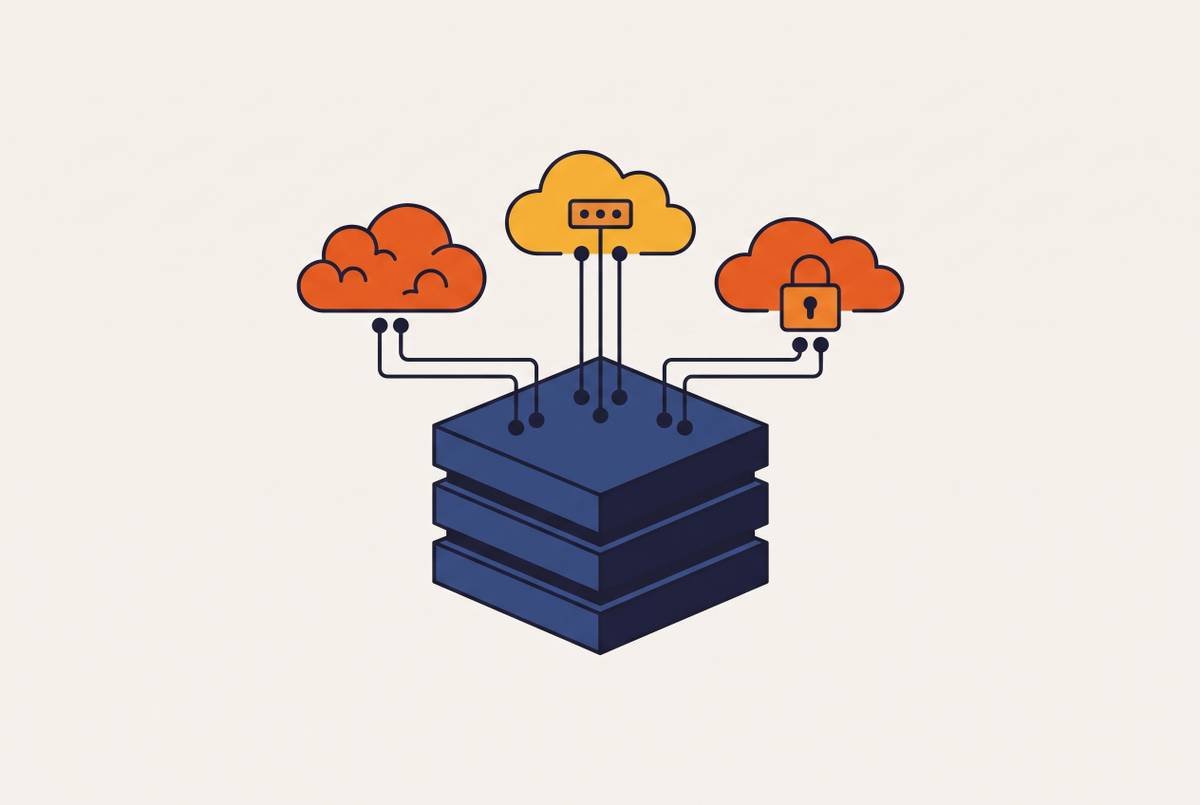
A Bring Your Own Cloud (BYOC) platform works the other way. It deploys into your own AWS, GCP, or Azure account. You own the servers. You control where your data physically sits. You pay the cloud provider directly, and any startup credits you've earned (AWS Activate, GCP for Startups, Microsoft for Startups) apply to your bill.
That ownership line produces a real consequence when a vendor changes its pricing. On a shared PaaS, a repricing event forces a full migration: new vendor, new infrastructure, new everything. On a BYOC platform, the infrastructure already lives in your account, so swapping the management layer on top of it doesn't require touching the servers underneath. The platform is replaceable. The infrastructure isn't going anywhere.
Three forces are pushing growth-stage teams toward BYOC as the default. Compliance regimes increasingly require that data and compute stay inside the company's own cloud account, something a shared platform can't offer by design. Startup credit programs make raw cloud compute dramatically cheaper than paying a shared-PaaS markup on top of it. And every team that's already been forced to migrate once, because a vendor changed its pricing or shut down a tier, knows that doing it again is expensive in a way that compounds each time it happens.
What "managed" means in the BYOC category
Deploying into your own cloud account doesn't automatically mean someone else is running it for you. The variable that matters inside the BYOC category is how much operational work the platform actually absorbs, versus how much lands back on your engineers.
Open-source single-server tools like Coolify, CapRover, and Dokku install directly on your VPS and strip out the per-dyno markups a shared PaaS charges. They give you the self-hosted spirit at a low price. But you become the operator of record. Cluster upgrades, CVE patches, cost tuning, incident response at 2 a.m., all of it sits with your team. A 5 to 20-person engineering group running these tools on AWS has infrastructure it owns, but it's also taken on a second job nobody budgeted headcount for.
BYOC platforms that ship with a managed control plane work differently. Porter, Flightcontrol, AZIN, and Kool.dev all deploy into your own cloud account, but they pair that with software and SRE coverage that handles the recurring operational load: provisioning, patching, scaling, monitoring. The gap between "your account" and "your account, managed" isn't a convenience feature. For a team without a dedicated DevOps hire, it's the gap between owning your infrastructure and spending a third of engineering time babysitting it.
That framing should drive the actual buying decision. Ask whether the engineers on staff should be spending their hours on cluster operations, or whether that time is worth more spent shipping product. The answer determines which half of the BYOC category fits: full self-hosted tooling, or a managed control plane sitting on top of infrastructure you still own.
The platforms: what each one deploys into
The right platform is the one whose managed layer covers exactly the operational work your team can't or shouldn't take on itself. Here's how the main options in this category stack up.
Porter deploys production-ready infrastructure directly into your own AWS, GCP, or Azure account, and for enterprise customers, directly into a customer's VPC. Compliance is built into the platform: SOC 2 and HIPAA are available in one click, running inside your own cloud account. Teams building AI products can add GPU instances for training and inference without assembling custom tooling around it. Because the infrastructure lives in your account, stopping payment on Porter doesn't take your servers down with it, the infrastructure keeps running, and the only thing you lose is the managed layer on top. Anthony Krivonos, co-founder of Toma, moved his company to Porter from a shared PaaS specifically to get away from shared-node reliability problems, and found versioned rollbacks, built-in observability, and one-click inference deployment as gains he hadn't been looking for. Porter fits engineering teams from seed through growth stage that need the entire deployment lifecycle (cluster setup, CI/CD, compliance) handled without hiring a dedicated DevOps engineer, including AI startups running GPU inference workloads.
Flightcontrol deploys exclusively into your own AWS account, built on ECS rather than Kubernetes, with no AWS markup layered on top and no hidden orchestration logic. Configuration lives in a flightcontrol.json file checked into the repo, so teams who'd rather manage their setup through version control than a dashboard get that infrastructure-as-code style. It fits AWS-committed teams who want that IaC control and are comfortable with ECS as the underlying orchestration layer.
AZIN deploys into your own GCP account, with AWS and Azure support on its roadmap. It connects to your cloud account, builds your code through Railpack with zero configuration, runs orchestration through GKE Autopilot, and wires up managed databases through Cloud SQL and caching through Memorystore. Developers never have to touch kubectl directly, which makes it a fit for GCP-committed teams that want Kubernetes underneath without a Kubernetes specialist on staff.
Kool.dev takes a different BYOC approach: it installs a lightweight Kubernetes distribution called k0s, with automated security hardening, onto any VPS reachable over SSH, including DigitalOcean, Hetzner, AWS, and Vultr. It handles auto-builds, a preview environment for every pull request, and zero-downtime deploys, and the developer never has to know Kubernetes. Pricing is metered hourly in USD and billed monthly, with unlimited build time and data transfer free during its current beta, custom AWS resources available on request, and a 7-day free trial. It's a strong match for teams running budget-conscious VPS providers like Hetzner or DigitalOcean who still want Kubernetes-grade orchestration without AWS or GCP pricing and without a Kubernetes operator on the team.
Coolify needs at least 2 GB of RAM and two CPU cores to run its control panel, and it supports multi-server deployments, but production-grade high availability takes extra configuration work. It doesn't include built-in cost optimization, automated incident response, or drift detection on your cloud permissions, so those responsibilities stay with whoever's running it. Coolify suits solo founders or small teams who want the visual experience of a managed PaaS running on their own server at low cost, and who are willing to operate it themselves.
CapRover is open source, installs with a single shell command, and runs on Docker Swarm underneath a web interface with a marketplace of over 100 pre-built applications. It runs on as little as 1 GB of RAM, though it needs a DNS wildcard record set up before installation. Docker Swarm itself has sat in maintenance mode for years, and failure modes across multiple nodes tend to surface quietly, making them harder to catch early. CapRover fits non-DevOps founders who want a clickable interface for simple multi-server scaling and can accept the Swarm trade-off in exchange for simplicity.
Migrating from a shared PaaS into your own cloud account
Migrations from shared PaaS to BYOC rarely fail because the destination platform was the wrong pick. They fail because the team moves too much, too fast, and loses the ability to back out if something breaks.
The first step is inventory, done before anything else moves. Every config variable, every environment secret, every add-on dependency needs to be written down. Each one is a hidden dependency that can silently break once it lands on a new platform, and finding that out mid-migration costs far more than finding it beforehand.
Next, move stateless services first and leave the database exactly where it is. Web processes and background workers shift to the new environment while the database stays put on the old platform. Cross-provider queries will run slower for a while. That's an acceptable cost in exchange for keeping a clean path back to the old setup if something goes wrong.
Once stateless services are running on the new platform, run both environments in parallel against the same database. Route a small slice of production traffic to the new environment and leave it there for at least a full week before committing further. A week of real traffic reveals load patterns and edge cases that staging environments never catch, no matter how thorough the staging tests were.
The database moves last, and only inside a planned maintenance window. Restore a backup on the new platform at least once before the actual cutover, so the restore process itself isn't untested when it matters. Teams that set up read-only database followers in the new environment ahead of time, then promote one of those followers during the maintenance window, cut their actual downtime dramatically compared with plans that originally budgeted for hours of hard downtime.
The platform you pick changes how much of this sequence you have to run yourself. Porter and other BYOC platforms with SRE coverage handle cluster provisioning, networking, and DNS before your team starts touching the application layer, so the migration plan can start at step one (inventory) instead of starting with VPC configuration from scratch.
How compliance requirements change the BYOC calculus
For teams handling regulated data, BYOC isn't a stylistic preference. Some compliance programs flatly require that all data and compute stay inside the company's own cloud account, and shared-tenant infrastructure can't meet that no matter how the vendor markets it.
The practical model that follows from this puts compliance controls inside the delivery pipeline rather than in a binder someone assembles the week before an audit. Access control, audit logging, encryption at rest and in transit, and evidence collection all run as gates inside CI/CD. When a scan or an access check blocks a CI step automatically, an audit becomes a straightforward query against systems that are already running the controls in production.
CVE management works the same way. Static analysis, dependency scanning, and secret scanning run as blocking gates in CI, and the resulting CI logs become the evidence an auditor actually wants: proof that scans ran and gated every release, not a summary written after the fact.
Pursuing SOC 2 and HIPAA together, rather than one after the other, captures substantial overlap between the two frameworks. A single control library mapped against both standards covers most of what each one separately requires, which makes doing them together meaningfully cheaper than tackling them in sequence.
Porter's one-click SOC 2 and HIPAA compliance runs inside the customer's own cloud account, so the compliance boundary never crosses into shared infrastructure the way it would on a multi-tenant platform. That distinction matters because a shared PaaS can hold its own certification while that certification covers only the vendor's infrastructure, not the customer's workload running on top of it. A BYOC platform with compliance controls built into the account itself means the customer's own environment is what's certified, and that's the thing enterprise buyers and auditors are actually asking about.
How cloud provider choice interacts with BYOC platform selection
For teams with inference or training work on their roadmap, GPU availability and pricing now carry more weight in picking a BYOC platform than general-purpose VM pricing does. The cloud provider underneath the platform matters differently once GPUs enter the picture.
AWS has said it will deploy more than a million NVIDIA GPUs across its regions starting in 2026, spanning both the Blackwell and Rubin architectures, which gives it the broadest GPU inventory of the major providers. Google Cloud is integrating NVIDIA Dynamo with its GKE Inference Gateway and plans to be among the first cloud providers offering NVIDIA's Vera Rubin NVL72 rack-scale systems in the second half of 2026.
The two providers reward different workload shapes. On GCP, GKE Autopilot's control plane fee matches its Standard tier, offset by a monthly free-tier credit covering one cluster, and its sustained-use discounts apply automatically, without any procurement process, to eligible N1 GPU instances running continuously. Those discounts don't extend to bursty training jobs or to the accelerator-optimized A2, A3, G2, or G4 GPU families, so teams running intermittent training runs on those instance types won't see the same automatic savings. Vertex AI-bundled discounts are available as a separate lever on top of that.
AWS brings the deepest GPU inventory and the broadest surrounding ecosystem. Its startup credit program, AWS Activate, deposits credits in bulk directly into a company's AWS account once approved, then applies them automatically each month against eligible charges. For a team running intensive load tests or training models before it has revenue coming in, that's a direct, usable offset against real GPU spend.
Picking a BYOC platform for an AI-heavy roadmap means picking the underlying cloud provider at the same time. A platform like Porter that supports GPU instances for training and inference across AWS, GCP, and Azure lets a team make that provider decision on its own merits, rather than having the platform choice force the cloud provider choice before the workload itself has even been scoped.