SOC 2 Compliance Debt Is an Infrastructure Problem Not a Consulting Problem
Building SOC 2 compliance means fixing your infrastructure, not hiring consultants.
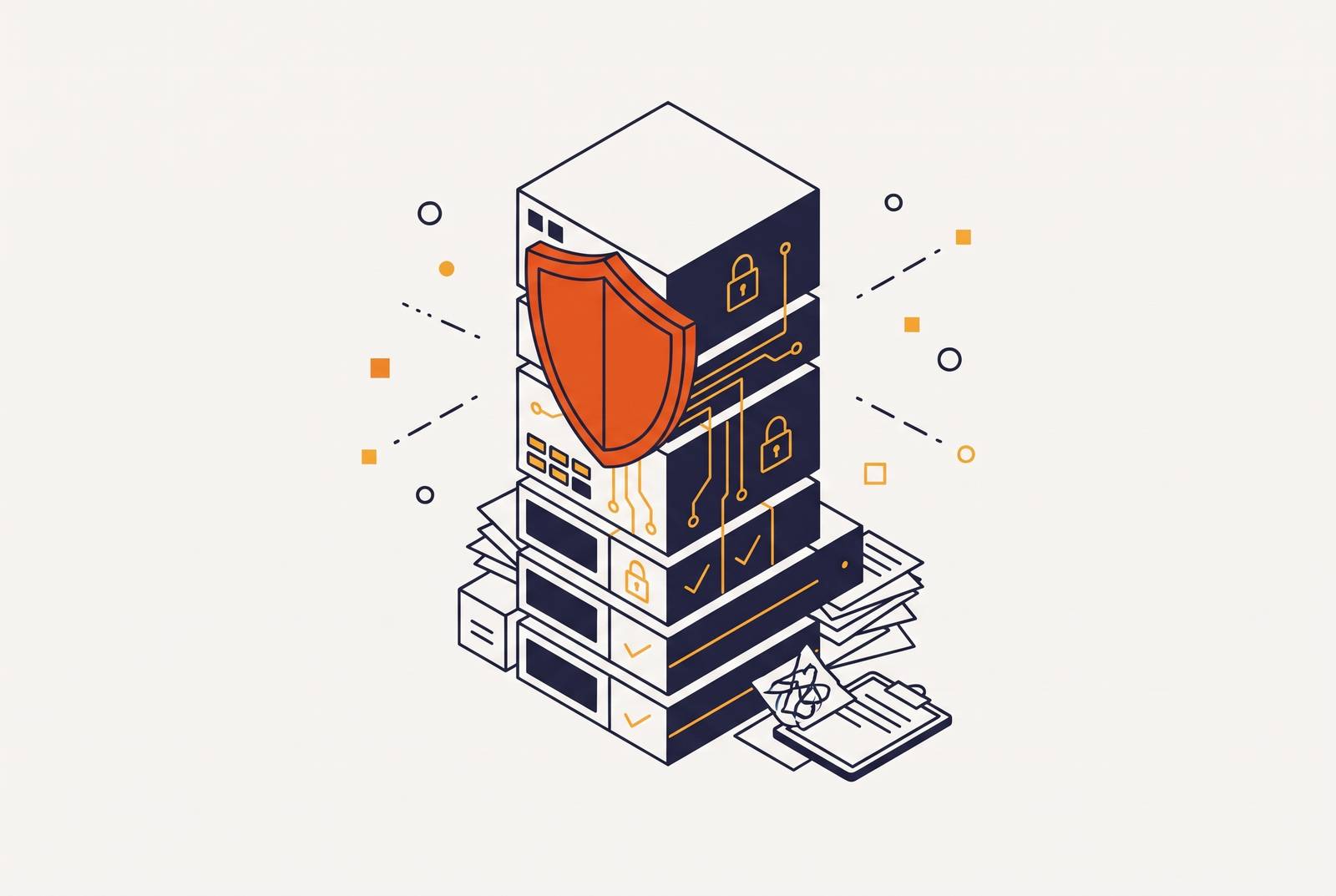
SOC 2 compliance debt is an infrastructure problem. It builds up in cloud configurations, missing logs, and manual access controls. Consultants can explain the requirements, and platforms can organize the evidence, but neither substitutes for a deployment environment that enforces controls. The way out of a recurring documentation project is to make compliance a result of normal engineering work.
Why SOC 2 keeps failing the same teams the same way
An enterprise buyer asks for a SOC 2 report in an email as part of a security review. The vendor has none. Engineers start gathering screenshots, policies, and whatever logs they can find, as the team rushes to explain how production works for the compliance effort. The team gets through a point-in-time audit, then repeats the scramble a year later. The recurring failure is not a lack of knowledge about SOC 2, but an environment that still cannot reliably produce evidence of its own controls.
A snapshot can show how controls were designed on a particular day without establishing that they keep working. Consultants and compliance-platform providers often treat the scramble as a problem with documentation, so evidence collection becomes the main work of the program. Automation genuinely helps here. It surfaces gaps faster and removes manual work, but finding infrastructure debt more efficiently does not resolve it. If the access process, logging configuration, or deployment workflow stays the same, the next audit starts with the same weaknesses.
What SOC 2 is actually auditing when it audits infrastructure
SOC 2 Type I assesses control design at a point in time, while Type II evaluates operating effectiveness over a monitoring period spanning several months. Production must work as it should for that whole period. A configuration fixed just before the audit cannot supply evidence that the control operated during the months before the fix. The distinction puts the deployment environment at the center of the infrastructure portion of the audit.
The five Trust Services Criteria are Security, Availability, Processing Integrity, Confidentiality, and Privacy. Their infrastructure implications include logging, access controls, encryption, vulnerability management, and change management. Auditors test whether access to production data is restricted, logged, and reviewed, whether configuration changes are tracked, and whether vulnerabilities are identified and remediated on a defined schedule. A policy describing restricted access establishes what the company says should happen, while access records help establish what happened.
Documentation still describes the controls and what they are meant to do. It cannot replace their operating history. For infrastructure controls, that history comes from the systems managing access, deploying changes, and recording activity. Evidence collection can put those records in order, but it cannot fill in the missing months.
Where compliance debt actually accumulates in a cloud environment
Compliance debt concentrates in three infrastructure layers, namely infrastructure-as-code configuration, access control management, and observability. Infrastructure as code, or IaC, can make an unsafe configuration repeatable just as easily as a safe one. Overly permissive security groups, missing encryption-at-rest settings, disabled logging, and IAM roles with excess permissions become deployed weaknesses. No later mistake is needed to expose them. When templates are never scanned before deployment, those weaknesses can remain invisible until an audit or an attack reveals them.
Access debt takes a different form. Manual provisioning and deprovisioning do not produce a clean audit trail by default, making periodic access reviews harder to substantiate. That gap is visible in access that former employees still have, over-provisioned roles, and undocumented service accounts.
Observability debt appears when logs are absent or too fragmented to explain what happened in production and when. Multi-cloud environments make this harder. Evidence of a control on AWS does not establish that the same control operates on GCP or Azure, so engineers become the manual integration layer between native tools. A provider’s SOC 2 attestation does not close that gap because application controls, access management, and deployment processes remain the customer’s responsibility.
Why the shared-responsibility boundary is where enterprise deals stall
The Azure example exposes the commercial consequence of that boundary. A startup migrates to Azure and assumes Microsoft’s SOC 2 attestation covers its solution. An enterprise buyer then requests the startup’s own report, which does not exist, and procurement stalls. The buyer is distinguishing inherited compliance from implemented compliance. Hosting on an audited foundation is not evidence that the vendor’s application controls work.
The same distinction applies to AWS and GCP. Their reports cover physical infrastructure and managed services, while the startup is still responsible for its application controls, personnel procedures, and deployment security. A sophisticated security review follows those responsibilities rather than accepting the cloud provider’s name as a substitute for evidence. Missing paperwork may be the visible obstacle, but the underlying gap is an unaudited operating environment.
Managed AI APIs do not erase that boundary either. Azure OpenAI Service, AWS Bedrock, and Google Vertex AI have SOC 2 Type II certifications and offer HIPAA BAA signing for eligible commercial accounts. A startup using those APIs inherits a compliance foundation for the API layer only. That assurance does not cover its own data handling, access controls, or deployment environment. Having its own Type II report can significantly shorten enterprise security reviews, while discovering this distinction during procurement costs sales velocity.
What a SOC 2 program actually costs when the infrastructure is not ready
The auditor’s invoice is only a fraction of the cost. Tooling, remediation, and internal engineering time account for the larger burden when infrastructure was not prepared before the program began. Initial budgets often miss that work. The surprise is not merely a more expensive audit, but the engineering effort required to make existing systems support the controls being assessed.
Without continuous controls, the team pays for that work again each year. Each audit cycle restarts the search for configuration gaps, incomplete logs, and access records that should already exist. A consultant can clarify what needs to change, but paying for that guidance does not remove the implementation work. The team saves money when the environment stays controlled between reviews, so later audits can use evidence from day-to-day work.
Health-data startups can face a second infrastructure effort if they treat SOC 2 as a substitute for HIPAA requirements. A signed Business Associate Agreement is not enough. PHI must be processed in an environment covered by that BAA, with appropriate administrative, physical, and technical safeguards, including encryption, access controls, and audit logging. PHI must also be contractually excluded from model training, with risk-management obligations addressed. A healthcare enterprise deal can expose these gaps even after the startup has completed its SOC 2 program.
What fixing the infrastructure layer actually requires
The engineering response is to put controls into the CI/CD pipeline and IaC layer before deployment. Branch protection, required code review, SAST on every pull request, and centralized logging make evidence a byproduct of normal work. Security and compliance then use the same controls.
That approach requires scanners at the stages where they can catch problems before release. SAST, DAST, dependency scanners, and IaC scanners should run before production deployment, with infrastructure templates checked before their configurations become live resources. These are classes of control. AI coding assistants make this placement especially important because they can introduce infrastructure misconfigurations as quickly as they accelerate development. A post-deployment check leaves the unsafe configuration in place until it is found.
Pre-deployment checks alone cannot deal with configuration drift that happens later. Drift detection should flag departures from the declared state and suggest IaC fixes, while native policy enforcement through services such as AWS Config or Azure Policy maintains required control states. Encryption at rest, restrictive security groups, and logging should be part of the managed configuration. Keeping them there requires ongoing detection and enforcement.
What compliance automation platforms actually do and do not do
Compliance automation platforms gather evidence, link it to controls, and show that those controls are in place and have worked. That is useful work. Integrations with AWS, GCP, Azure, GitHub, Okta, and similar sources replace the manual gathering of screenshots, logs, and documents across hundreds of control points. When the controls work, automation makes it easier to keep collecting evidence of them and show it to auditors.
The 2026 market also distinguishes evidence-focused platforms from products that bundle evidence collection with active security. Vanta, Drata, Secureframe, Sprinto, and Thoropass illustrate the evidence-focused category. Evidence-plus-active-security products add tools such as DLP, DSPM, and OAuth governance, which can help controls work as well as record that they are in place. Some products do more than collect proof, but they still do not substitute for engineering the deployment environment.
Threat modeling, fixing IaC misconfigurations, enforcing a secure development lifecycle, and remediating findings remain engineering responsibilities. A dashboard can report those gaps accurately without resolving them. Paying a meaningful annual license fee for that visibility can therefore leave the largest part of the work untouched. Fix the infrastructure before buying the platform so the platform organizes evidence of working controls instead of becoming a paid inventory of unresolved problems.
How deployment architecture determines whether compliance is permanent or recurring debt
An environment that enforces controls automatically has a decisive architectural advantage over one that relies on people to maintain them manually. An environment deployed into a customer’s own cloud account with IaC-managed resources has a structural advantage because resources are declared, configurations are version-controlled, and departures from a known-good state are detectable. The controls have an inspectable foundation. In a shared-tenant environment, infrastructure may be opaque to the customer, and logging, access, or encryption settings may not be configurable at the required level.
That difference changes the evidence workload. A team operating in its own VPC with IaC-managed resources and centralized logging can generate evidence through its normal deployment pipeline. A team whose shared platform does not expose the needed evidence must export, translate, and manually correlate what is available. One-click SOC 2 or HIPAA compliance is credible only when the deployment environment was designed to support the requirements.
GPU and inference workloads add further infrastructure questions, including data residency, training data isolation, and model access controls. Written policies cannot provide isolation when the environment has none. When those controls are built in and drift is managed, the annual audit becomes a calendar event rather than another infrastructure project, with later cycles taking a meaningful fraction of the first-year effort.
Treating SOC 2 as an infrastructure maturity signal rather than a documentation exercise
A mature SOC 2 program has a different operating rhythm from an audit scramble. The pipeline generates evidence, drift is caught and corrected in hours, and access reviews are automated outputs of access-management infrastructure, replacing quarterly manual exercises. The compliance platform presents that evidence to auditors.
A six-month remediation sprint reveals more than a compliance gap. It signals that the deployment architecture was not production-ready in the ways the audit exposed, and that the same debt could have caused security and reliability problems without an audit on the calendar. For AI startups, enterprise buyers also look at prompt retention, training data isolation, and third-party LLM usage. Standard SOC 2 scope does not cover those questions, but the infrastructure controls already in place give a team something concrete to answer with.
An audit of the deployment environment should therefore precede engaging a consultant or purchasing a compliance platform. Missing logging, unscanned IaC, and manual access controls are the first things to fix. A SOC 2 report is a lagging indicator of infrastructure health.