Continuous Compliance Monitoring Tools for Cloud Infrastructure
Regulators now demand real-time proof of compliance, not annual snapshots.
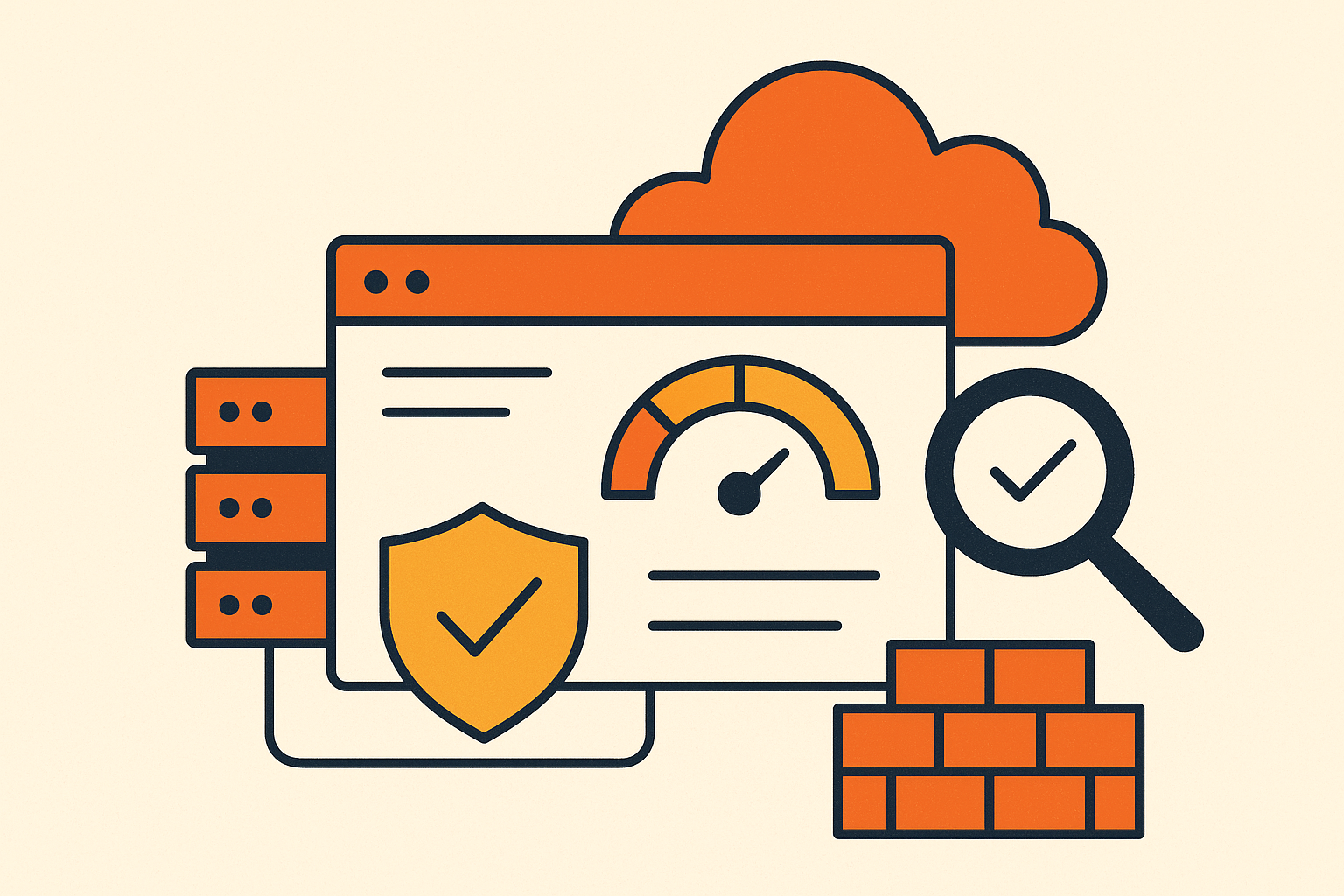
A point-in-time audit catches a snapshot, nothing more. The misconfiguration introduced the day after that audit stays invisible until the next one, which might be a year out. That gap is the whole problem, and regulators have stopped tolerating it. GDPR, PCI-DSS, CCPA, and newer standards like NIS2 and DORA now expect ongoing proof of compliance, not a clean picture taken once a year.
Continuous assurance treats compliance as a running state, not a calendar event. Controls get tested automatically and often, sometimes hourly, instead of getting stitched together by hand right before an audit window opens.
In practice, that looks like:
- Evidence pulled straight from live infrastructure instead of someone screenshotting settings
- Alerts firing the moment a control drifts out of line
- Audit trails that build themselves as work happens, not after the fact
- Dashboards that stay current across every framework a team has to answer to
ISACA's framing on this, from a piece by Omotayo F. Salako published in December 2025, points to three technologies doing the work together: AI, robotic process automation, and cloud security posture management. CSPM gives one view of cloud settings measured against a baseline. AI reads the stream of events and flags what looks off. RPA does the fix and writes down that it happened.
Take a storage bucket spun up without encryption. An AI-driven platform can encrypt it on its own, log the action, and file that log as compliance evidence. The gap closes before it ever becomes a finding on someone's audit report. Almost 40% of legal, compliance, and privacy leaders already rank a proactive compliance program among their top five priorities. The will is there. What most teams are missing is a clear system. It's knowing which tool actually closes the gap instead of just writing it up after the fact.
The integration layer that makes or breaks a compliance tool
A compliance tool only knows what it can read. Cut off from half the stack, it rebuilds the exact silos continuous monitoring was supposed to erase. Teams buy a tool for the dashboard, then find out six months later it never connected to half their infrastructure. That's the failure mode to watch for, and it's more common than the sales demos let on.
The connections that actually matter:
- Cloud infrastructure (AWS, Azure, GCP): configuration state, IAM policies, network rules, resource inventory
- Identity providers (Okta, Google Workspace): access events, provisioning, MFA status
- Version control and CI/CD (GitHub, GitLab): code changes, deployments, policy checks run at build time
- Ticketing and workflow (Jira): who's fixing what, and proof it got fixed
- HR systems: onboarding and offboarding tied to actual access records
- The wider SaaS sprawl a team runs day to day, not just the cloud layer
Policy-as-code is the real dividing line now, not a feature on a checklist. When enforcement sits inside the pipeline, a misconfiguration gets stopped before it ever reaches production, not caught weeks later in a report someone reads after the damage is done. That's what DevSecOps integration is supposed to mean: compliance checks running as part of deployment, not bolted on as a separate step afterward.
Multi-cloud visibility isn't optional for most teams anymore either. A unified view across AWS, Azure, and GCP beats three separate compliance postures someone has to stitch together by hand every quarter. So when evaluating a tool, weigh framework coverage, multi-cloud support, depth of DevOps integration, audit-ready reporting, and risk prioritization that accounts for context. A long feature list on a sales page tells you almost nothing about whether the thing actually talks to your stack.
The cloud-specific risks that compliance monitoring must cover beyond CVEs
The CVE backlog is genuinely enormous now. Mondoo's State of Vulnerabilities 2026 counted more than 48,000 CVEs published in 2025, a 21% jump year over year, adding around 132 new entries to the pile every day. Scanning for known CVEs, though, doesn't touch most of what actually breaks cloud environments. Treating CVE coverage as the whole job is the mistake, and it's the mistake most teams still make.
Google Cloud Threat Horizons data cited in that same Mondoo research breaks down root causes differently: 29.4% of cloud incidents trace back to misconfigurations, and 47.1% trace back to weak credentials. Neither shows up in a CVE feed. Catching them takes CIS Benchmarks and ongoing configuration checks, not a vulnerability scanner.
The scoring math makes this worse. Only 24% of 2025's CVEs carry a CVSS 4.0 score, so a scanner that filters by CVSS severity is blind to most of what's actually out there. Timing cuts against defenders too: 80% of exploits are already circulating publicly before their CVE even gets published, with a median gap of 23 days between first exploit and the CVE entry showing up. That gap, the 23 days where a weak credential or open misconfiguration sits exposed, is exactly the window an audit-cycle tool sleeps through.
Supply chain exposure is stacking on top of this. IBM's X-Force Threat Intelligence Index 2026 puts large supply chain incidents at nearly four times what they were five years ago. None of this argues against CVE scanning. It argues that a compliance platform has to watch configuration state and identity posture around the clock, not run a scan on a schedule and call it done.
Eight tools that handle continuous cloud compliance in practice
These aren't ranked. Each fits a different shape of team, different cloud footprint, different set of frameworks. Pick based on what the tool actually connects to, not on how good the dashboard looks in a demo. That's the whole lesson from the section above, applied.
Wiz runs as a CNAPP, built for enterprises that need one view across multiple clouds with risk ranked by actual context. It covers more than 100 compliance frameworks and links findings to data sensitivity, identity exposure, and network reachability, not just how bad a flaw looks sitting alone in a report. Deployment is agentless, which cuts onboarding time down considerably. More than half of Fortune 100 companies run it, and G2's CNAPP Report for Summer 2025 ranked it first in category. Its attack path analysis, flagging "toxic combinations" where small issues chain into something serious, sets it apart from tools that only flag misconfigurations one at a time.
Vanta is compliance automation aimed at startups and mid-sized companies chasing their first SOC 2 or ISO 27001, or juggling several frameworks at once. It connects to more than 400 tools spanning cloud, identity, code, HR, and security systems, and runs upward of 1,400 automated hourly tests across more than 35 frameworks. Its AI Agent reviews evidence, spots gaps, maps controls to requirements, drafts policies, and suggests fixes, cutting the manual review load down a lot. The sheer breadth of integrations makes it a strong fit for teams scattered across dozens of SaaS tools, not just cloud infrastructure.
Drata takes an AI-native approach for fast-growing companies managing several infosec frameworks at once, especially ones scaling out of startup mode into mid-market. It connects to AWS and Azure plus DevOps tools through more than 100 integrations, and tests pre-mapped controls continuously across ten-plus frameworks using a standardized controls-and-tests model that scales predictably as a company grows. AI features handle things like auto-filling security questionnaires. Drata is not a full CNAPP, and teams with deeper cloud threat detection needs may find they require additional tooling alongside it.
Hyperproof aims at organizations that want compliance running quietly in the background instead of living on a checklist. It tracks SOC 2, ISO 27001, HIPAA, and NIST at the same time, and lets evidence tasks get reused across frameworks so nobody's uploading the same file three times. It connects to cloud, IT, HR, and DevOps systems to pull evidence automatically, and comes with real-time alerts, a risk library, and audit trails that write themselves. Its advanced analytics are still maturing, and complex enterprise processes need real tuning to fit.
Sprinto targets cloud-hosted businesses going after SOC 2, ISO 27001, HIPAA, GDPR, or PCI-DSS, among more than 20 supported frameworks. It automates evidence collection, audit management, and policy enforcement by hooking into systems a team already runs, and gives continuous visibility into compliance posture across the frameworks it supports. It's built specifically for cloud-hosted business models.
Scrut Automation covers a wide range, from early-stage startups to enterprise, with particular strength around SOC 2. G2's Winter 2025 Report named it a leading SOC 2 compliance tool, and it picked up 11 Momentum Leader badges alongside 257 others. It supports SOC 2, ISO 27001, CCPA, GDPR, and HIPAA.
Orca Security runs agentless and fits teams that need broad compliance coverage without a long deployment cycle. It checks against more than 150 cloud security compliance standards and ships automated remediation workflows. Its SideScanning approach gives full asset discovery without installing anything on workloads, and its risk prioritization goes beyond surface-level configuration flags to weigh broader context around each finding.
AccuKnox is a Zero Trust CNAPP with runtime protection, built for security-first teams running Kubernetes-heavy or multi-cloud and edge workloads. Built on the open-source KubeArmor project, it enforces least-privilege policies and auto-generates compliance mapping for PCI DSS, NIST, HIPAA, and more than 30 other frameworks including SOC 2, CIS, GDPR, and FedRAMP. Its edge is behavioral analytics and runtime enforcement: compliance gets checked against what a workload is actually doing, not just what its config file claims it should do. It integrates into DevSecOps pipelines and stays CNCF-aligned and open-source friendly, which matters to teams avoiding lock-in at the runtime layer. Teams without real container workloads won't get much use out of it.
AWS Security Hub centralizes findings across AWS services and covers PCI DSS, NIST, and CIS natively (ISO 27001 support sits outside Security Hub's native coverage). Microsoft Defender for Cloud does the equivalent for Azure, with built-in compliance dashboards and threat protection. Both work as a starting point for single-cloud teams, and both are built around their respective native cloud environments rather than a multi-cloud model. Neither is designed as a dedicated cross-cloud compliance platform, and teams that try to stretch either one past its native cloud typically find the gaps compound quickly.
How to match the right tool to where your team actually is
No tool here is right for everyone. What decides the fit is company stage, how the cloud architecture is built, and which frameworks are actually mandatory for the business, not which vendor has the loudest marketing. Anyone shopping by feature list alone is doing it wrong.
For an early-stage startup chasing a first SOC 2 or HIPAA certification, integration breadth matters more than anything else. The tool needs to reach every SaaS and cloud service already in use, not just the primary cloud provider. A tool that covers AWS beautifully but misses Jira, Okta, and half the HR system watches only a narrow slice of the business. It's watching a slice of it and calling that the whole picture. Vanta, with its 400-plus integrations and 1,400-plus automated tests, and Drata, with 100-plus integrations across ten or more frameworks, are both built for exactly this stage. Sprinto and Scrut sit in the same lane, purpose-built for cloud-hosted businesses moving from early stage into mid-market, where the frameworks pile up faster than a small team can track by hand.