How Deployment-Layer Compliance Platforms Outperform Bolt-On Audit Tools for SOC 2 and HIPAA
Preventive controls at deployment block unsafe changes before production reaches auditors.
Deployment-layer compliance platforms outperform bolt-on audit tools for SOC 2 and HIPAA because they can block unsafe changes before production. For startups on AWS or GCP, the stronger foundation is infrastructure that enforces technical safeguards by default, paired with tools for policies and administrative evidence. One-click provisioning can shorten environment setup, but it cannot deliver a SOC 2 Type II opinion or complete HIPAA compliance.
Why audit-period thinking fails in environments that change continuously
Kubernetes clusters change with every deployment, autoscaling creates and destroys workloads in seconds, and GitOps pipelines push changes many times per day. Periodic verification can leave a recorded configuration out of step with the environment that is running now. When infrastructure changes faster than a scan cycle, the resulting snapshot can become stale before the next deployment, let alone before an auditor examines it.
Traditional compliance tooling was built for an environment that changed more slowly, where configurations were set once and servers ran for months. Periodic scans helped because little changed from one scan to the next. A workload can appear, process data, and disappear while the evidence system is still describing the resources that existed at its last scan.
Collecting more snapshots does not resolve this mismatch. Scanning more often can show more of what is running, but it still leaves open the question of whether a control governed a change when it happened. Bolt-on audit tools approach that question by examining infrastructure and assembling evidence about it. That work is useful, but it starts from a different position than a control that decides whether a deployment may proceed.
What bolt-on audit tools actually do, and where their authority ends
Bolt-on audit tools include governance, risk, and compliance platforms, cloud security posture management tools, and compliance automation suites. In their scan-and-report role, they examine existing infrastructure, collect evidence, and surface gaps in a running environment. Their authority ends short of the deployment decision. A finding tells a team something needs attention, but the finding itself does not prevent the underlying change.
These tools still remove substantial administrative work. They organize evidence, map controls to frameworks, manage policy documentation, track Business Associate Agreement status, and help prepare audit packages. Without them, teams may have to use spreadsheets and take screenshots by hand. Integration coverage, reporting quality, multi-framework support, and vendor-risk workflows are useful capabilities, even though none alone establishes that a production control is enforced.
The distinction becomes clearer when looking at what is being monitored. The SOC 2 Trust Services Criteria include Security, Availability, Processing Integrity, Confidentiality, and Privacy, and a GRC platform can track evidence against the applicable controls. Fresh evidence is not proof of current effectiveness. Continuous controls monitoring goes further than infrastructure scanning by testing the control environment across business processes, operations, technical systems, and policies. That broader remit makes it valuable, but it still should not be confused with authority to block a deployment.
The structural evidence gap that bolt-on tools cannot close
An alert about an open S3 bucket describes a state that already exists. The resource is live, and data may already be exposed. By the time detection starts, the preventive control has already failed. A rapid alert can help a team respond, but it cannot turn that failure into evidence that the unsafe state was prevented.
An audit tool can report that a CI/CD pipeline has no approval gate, but engineering must still build or introduce the gate. Reporting the absence does not enforce the presence. Until the pipeline changes, the next release can follow the same uncontrolled path, regardless of how clearly the gap appears in the audit dashboard.
Ephemeral workloads create a separate problem for evidence coverage. A workload created and destroyed by autoscaling may never appear during a scan window. Multi-cloud environments also make it harder to keep everything in one view, though scans that cover more of the environment can help fill in what is missing. Neither improvement changes when enforcement occurs. A record of configurations seen during scans is not equivalent to a record showing that changes passed through controls throughout the period under examination.
Evidence collection has a structural limit regardless of scanning schedule: it can describe and test controls, but it cannot substitute for a missing control in the production path.
How the deployment layer enforces controls before code reaches production
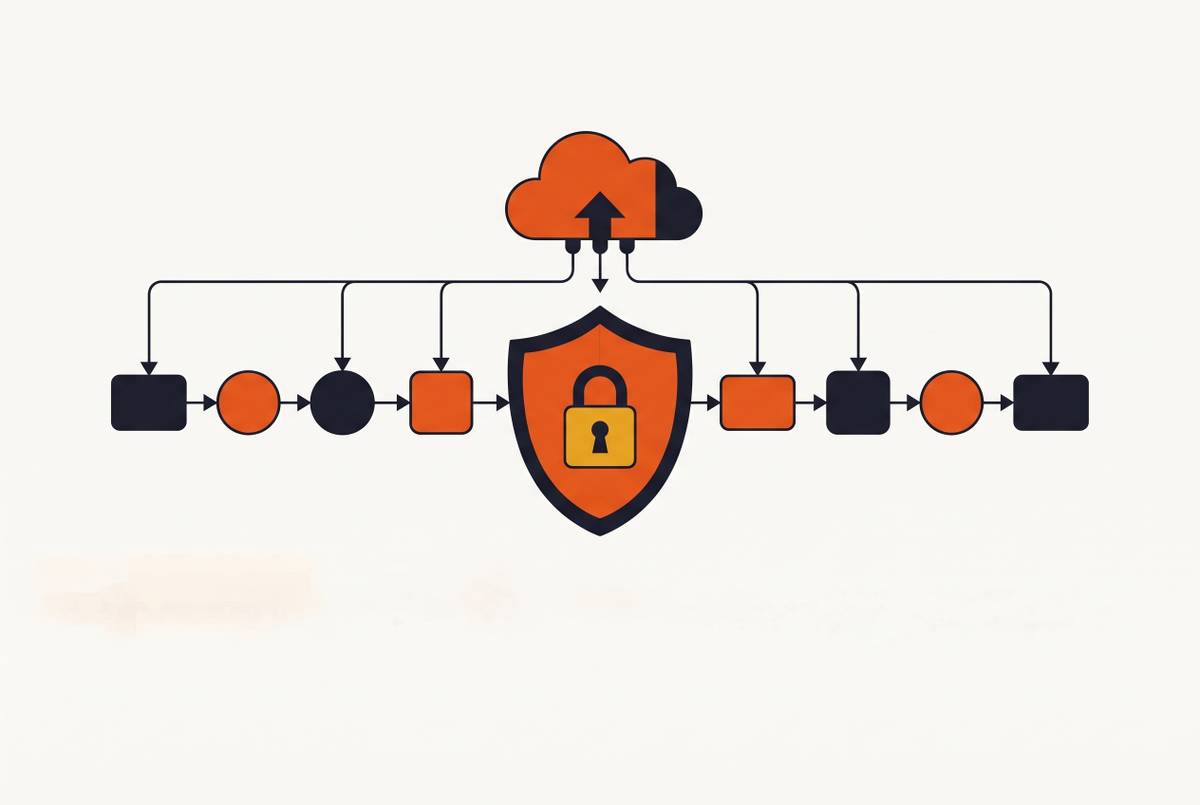
Deployment-layer compliance puts controls where a change is proposed or promoted. Instead of waiting for a running resource to become a finding, the pipeline can stop the change before it reaches production. The position of the control changes the outcome. When a check fails, the deployment is blocked before the configuration goes live and needs repair.
Checkov makes this mechanism concrete for infrastructure as code. It can detect open storage buckets and missing encryption before a terraform apply runs, with findings mapped to frameworks including CIS Benchmarks, SOC 2, and NIST controls. Trivy addresses a different part of the release by flagging CVEs in container images and dependency lock files before production promotion. When these checks are used as blocking steps, the pipeline can enforce them as well as report what they find.
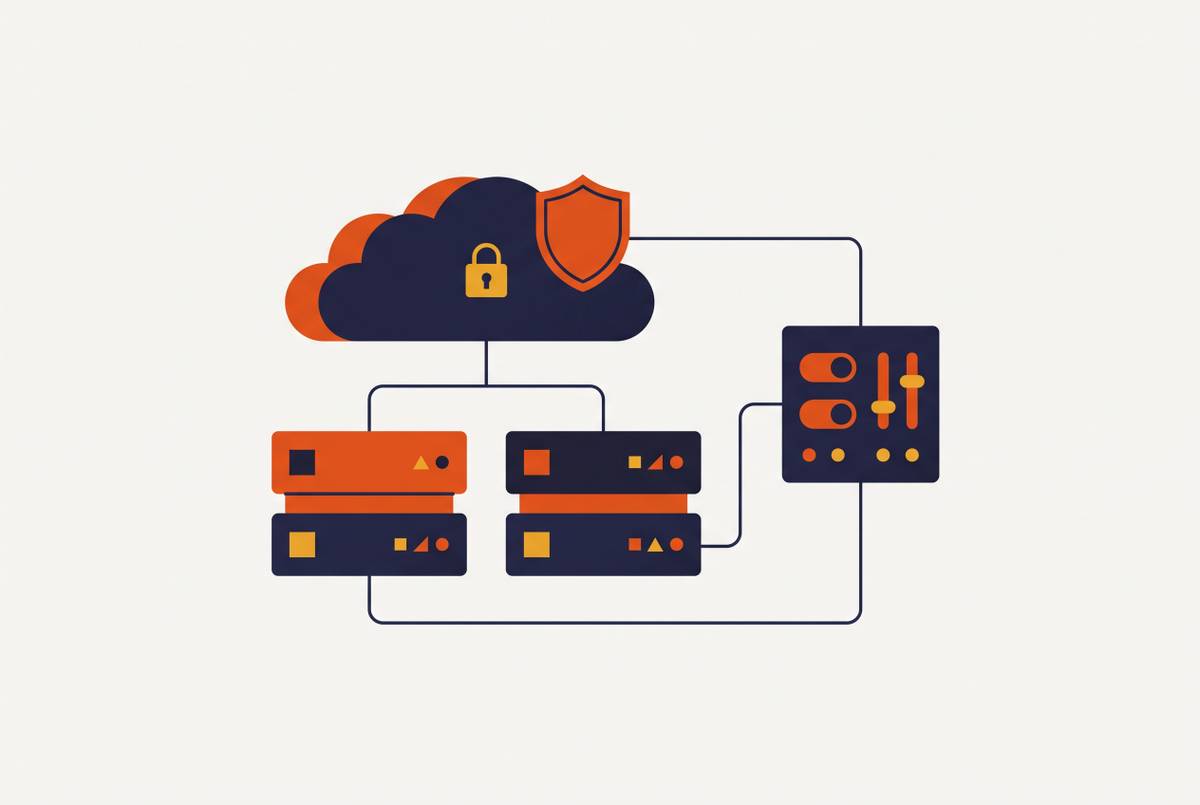
The managed environment can also make safeguards inherited defaults. Encryption, logging, patching, vulnerability scanning, and access policy then apply to deployed workloads without depending on a later scan to discover omissions. SSO and role-based IAM support least-privilege access at the infrastructure layer, including requirements addressed by SOC 2 CC6.3 and HIPAA access controls.
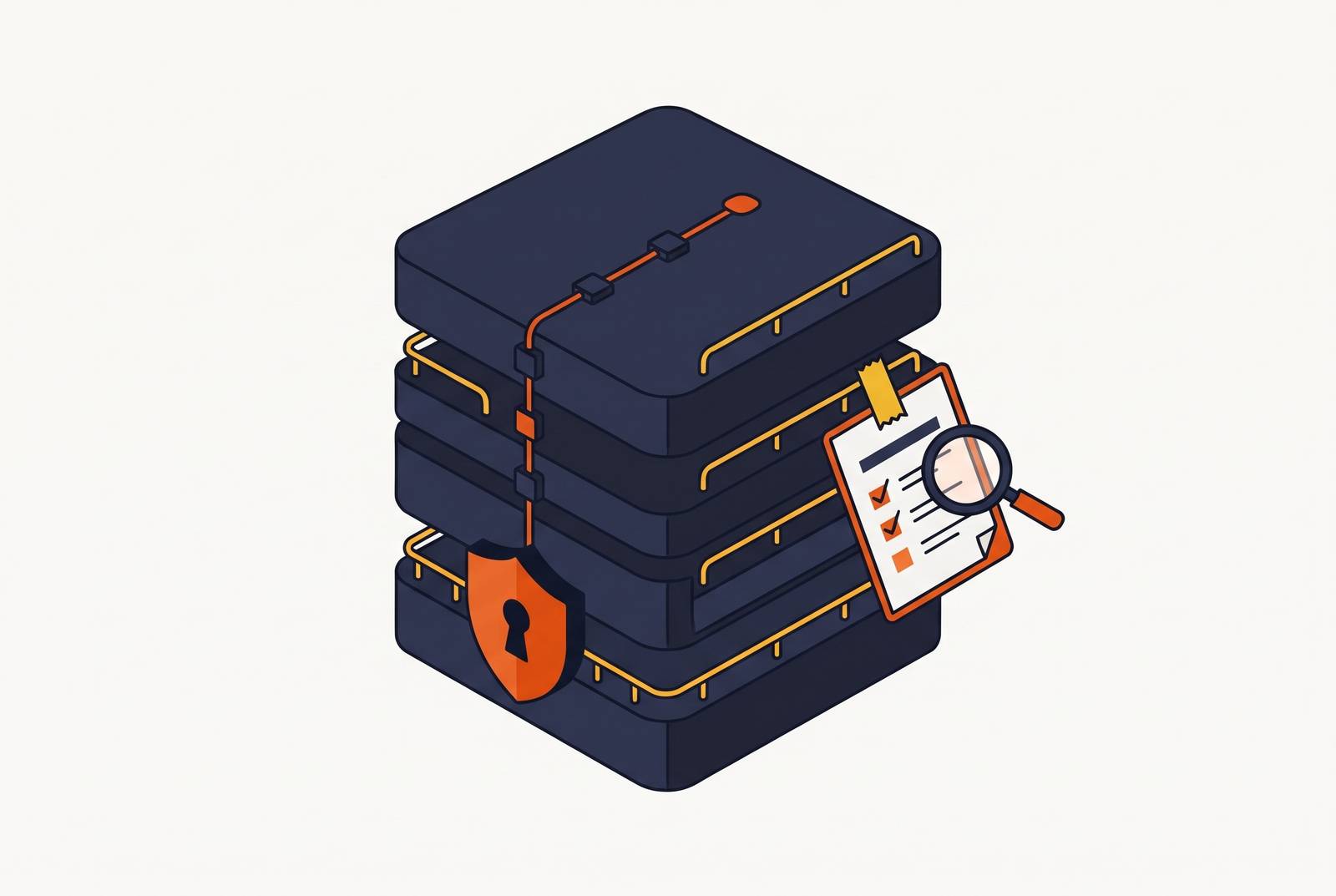
The resulting evidence has a different shape. An immutable record of changes gated through a controlled process maps to SOC 2 change management controls under CC8 and HIPAA audit-control requirements.
What SOC 2 Type II and HIPAA actually require that makes this distinction matter
SOC 2 Type II examines whether controls worked over an observation period that typically lasts six to twelve months. It is not a point-in-time assessment. Independent testing must support an opinion about the period, which makes evidence between audit milestones important. Deployment gates support that requirement by generating records as changes happen, though the platform does not replace the independent assessment.
The report's scope also limits what its opinion establishes. A vendor may have Security in scope while Confidentiality and Availability are excluded. The badge does not answer every buyer question. If those criteria were excluded, the report does not provide an opinion under them about sensitive payload handling or controls supporting uptime commitments.
HIPAA has no certification body and requires more than technical configuration. Compliance includes documented risk analysis, administrative, physical, and technical safeguards, workforce training, breach notification procedures, and signed Business Associate Agreements where business associates are involved. A “HIPAA-ready” label does not replace a required BAA. Nor does a SOC 2 report remove those separate obligations.
HIPAA's documentation standard, 45 CFR § 164.316(b)(2)(i), requires six-year retention of required documentation. Applying that period broadly to PHI access and security-event logs is a best-practice interpretation that goes beyond the audit-controls standard's explicit requirements. Evidence retained only for days or months cannot support years of inspection. For enterprise healthcare SaaS, the combined test is legal responsibility for protecting data under HIPAA and tested control effectiveness under SOC 2.
The sub-processor and BAA trap that catches bolt-on tools in procurement
An enterprise buyer looks beyond the application being purchased to the vendors that touch its regulated data. A compliance or integration tool that stores, caches, or queues payloads can trigger a separate vendor-risk review, even when the storage supports only debugging or retries. Temporary handling still creates a data path. The buyer must evaluate that path rather than accept the tool's role as evidence that it is harmless.
For healthcare procurement, a required BAA can become a binary blocker. If a vendor handling PHI will not sign one, certification logos do not solve the problem. With shared multi-tenant storage, the review also covers how the vendor's architecture handles data. The relevant questions concern where PHI goes, who controls that environment, and what obligations cover it.
The report itself gets similar scrutiny from InfoSec teams. They read the scope under NDA to see which Trust Services Criteria were tested, rather than treating the badge as a clean bill of health. Confidentiality excluded from scope leaves a gap when sensitive payloads are involved. Teams should also check retention practices, because keeping data beyond a stated retention period, including after customer offboarding, leaves them with ongoing liability.
With customer-account deployment, there may be no third-party runtime data store to review. Where regulated data stays inside the customer's VPC, there is no shared vendor runtime holding those payloads. That does not erase every vendor obligation. Whether a BAA is still needed depends on what the platform's management plane handles along the data path.
Where deployment-layer compliance stops and what it needs alongside it
A deployment platform cannot make workforce training happen or do the work of a documented risk analysis. Its strongest coverage is technical, including encryption, access control, patching, and logging. HIPAA's administrative safeguards remain outside that boundary. Treating those safeguards as solved because the infrastructure is well controlled would repeat the same category error as treating an audit dashboard as a deployment gate.
Continuous controls monitoring also reaches beyond infrastructure configuration. Business-process, operational, and policy controls require evidence that a release pipeline does not provide. Policy management, training records, and vendor BAA tracking therefore remain required parts of the compliance program after deployment.
Deployment-layer controls should be the technical foundation, with a lighter GRC tool on top to manage policy workflows and administrative evidence. Each layer then has a defined job. The deployment system governs technical changes, while the GRC system organizes the broader program and evidence needed for review.
Starting in the reverse order can create expensive rework. A heavyweight audit tool may map a program around architectural assumptions that later prove unsuitable for regulated data. Retrofitting the missing infrastructure controls then requires changes to both the environment and its compliance documentation.
How should startups evaluate deployment-layer platforms for SOC 2 and HIPAA on AWS or GCP?
A team should first establish where regulated data lives by finding out whether the platform runs in the team's own cloud account or sends payloads through shared vendor infrastructure. That answer defines the vendor data path. Infrastructure-first PaaS options, including customer-account deployments, are a useful starting point because architecture determines which storage and sub-processor questions the team must resolve.
Technical safeguards should be inherited at deployment. The evaluation should cover encryption at rest and in transit, network policy enforcement, least-privilege IAM, automatic CVE patching, and immutable audit logging. Defaults deserve more weight than optional features. The same scrutiny should apply to evidence, with pipeline gating records, change approvals, and access-control enforcement generated by the deployment process.
For GPU and inference workloads, coverage must extend to accelerated compute. PHI and confidential model inputs need data isolation, no third-party data retention, and VPC-contained inference. BAA availability should also be settled before the architecture decision, including whether its scope covers the management plane or only the runtime. If that boundary only comes to light during an enterprise security review, it is too late to treat it as a small contract detail.
One-click compliance environment provisioning can compress technical setup from months to days when aligned controls are the default. It does not compress the SOC 2 observation period or complete HIPAA's administrative work. For a startup without a dedicated compliance team, the useful goal is less infrastructure work to perform and prove manually. The foundation decision concerns who controls the data and the path into production.