Internal Developer Portals for Small Engineering Teams
Small teams usually solve deployment problems before they need a portal.

Most small teams that go looking for an internal developer portal have already made a mistake, and it happens before they evaluate a single tool: they've confused a coordination problem they don't have yet with a deployment problem they do. An internal developer portal fixes the mess that shows up when engineering teams get big enough that nobody can hold the whole map in their head anymore. Ownership goes fuzzy, every deploy needs a Slack message to the one person who understands the pipeline, onboarding takes weeks instead of days. That's a real problem, but it belongs to a specific team size, and most small teams reading about IDPs right now haven't hit it. Adopting one anyway doesn't remove overhead. It just relocates it.
Start with the vocabulary, because the market genuinely muddles it, and the confusion isn't an accident; vendors benefit from you not knowing the difference. A portal is the UI layer: a dashboard, a service catalog, a form where an engineer requests a new environment. A platform is what's underneath, doing the actual work: provisioning infrastructure, managing secrets, running deployments. A portal without a platform behind it looks like a solution and delivers nothing; click the button, and nothing happens except a ticket opening for a human to do the work manually anyway.
Backstage, built by Spotify, is a portal. Humanitec sits much closer to the platform side, standardizing provisioning and deployment across an existing toolchain. Both get marketed under the same "IDP" umbrella, which is most of why teams end up confused about what they're actually buying. Self-service, in practice, means an engineer can spin up an environment, ship a service, or check who owns a piece of infrastructure without pinging anyone else. Anything short of that is a nice-looking dashboard sitting on top of the same manual process it was supposed to replace.
Why the IDP conversation is happening now, and why the timing creates a trap for small teams
Gartner projects that 80% of software engineering organizations will have a platform team by 2026, and 75% of organizations with platform teams will offer self-service portals to their engineers by 2025. Those numbers circulate constantly in engineering leadership circles. Read them closely, though: they describe enterprises and mid-market companies that already employ a platform team to build and run the thing. That detail gets dropped every time the stat gets repeated.
There's a separate, real pressure in the data too. Cortex's 2025 research found that pull requests per author rose 20% year-over-year, but incidents per pull request jumped 23.5% and change failure rates rose 30% over the same period. Output is outrunning comprehension. That pattern shows up in small teams as much as large ones.
Here's the trap. A ten-person team sees those incident numbers, sees the Gartner projections, sees three companies in their peer group standing up Backstage instances, and concludes adopting a portal is the obvious next move. Nobody stops to ask whether their actual bottleneck is the one a portal solves. Speed outrunning comprehension is real. A missing portal is almost never the cause of it, and small teams that skip straight to "we need a portal" are usually solving the wrong layer of the stack.
The specific problems IDPs are designed to solve
Tool sprawl is the first, and it's measurable. According to Port's State of Internal Developer Portals research, development teams use an average of 7.4 tools, and 75% of developers lose between 6 and 15 hours a week switching between them and hunting for information. Port's own calculation, using Bureau of Labor Statistics wage data, puts that cost near $1 million a year in lost productivity for a 50-engineer team. That's most of a small startup's annual burn, gone to context-switching.
Trust is the second problem, and it's worse than sprawl because it compounds instead of just accumulating. Only 3% of engineers feel the metadata in their service catalog is completely trustworthy, and half have real doubts about it. Once trust drops, people stop checking the portal and go back to asking a colleague directly, which defeats the entire reason the portal got built in the first place.
Then there's ownership ambiguity: who's on call for this service, what does it depend on, who gets paged at 2 a.m. That question kills incident response time at scale. Onboarding drags on for the same root cause, since new engineers reverse-engineer the service graph out of old Slack threads instead of reading it somewhere real. Underneath all of it sits the self-service bottleneck: every environment request, every secret rotation, every new service scaffold needs a human in the loop, usually someone on the platform team fielding the same request for the fortieth time.
All five are coordination and discovery problems. They show up when a codebase and a team get big enough that no single person can hold the whole picture in their head. They do not show up earlier than that, no matter how good the pitch deck looks.
At what team size these problems actually appear
This threshold matters more than anything else in this conversation, and most vendor conversations skip right past it. A team of five engineers working across two services does not have a discoverability problem, full stop. A team of forty spread across thirty microservices almost certainly does. The problems are real. They're not universal, and pretending otherwise is exactly how small teams end up over-building something nobody asked for.
A few signals suggest the problems have actually arrived. Engineers can't name who owns a failing service in the middle of an incident. Getting a new hire to a runnable local environment takes more than a day. A platform or DevOps engineer keeps fielding the same provisioning request that could just be templated. Multiple teams deploy independently with no shared view of what's running in production. A compliance or audit requirement now demands a documented service inventory.
And a few signals say the team isn't there yet: everyone still knows what every service does and who owns it, deploys run through one shared process everyone understands, headcount sits under ten or fifteen people. If that's the picture, the median engineering team, by Gartner's own numbers, is small enough that the core IDP value proposition simply doesn't apply yet. What looks like an "IDP problem" on a small team is usually a deployment problem, a visibility problem, or a process problem wearing a portal-shaped costume.
What small teams usually need before they need a portal
The actual bottlenecks at small scale cluster in a handful of places, and none of them get solved by a service catalog. Deployment is inconsistent: one engineer deploys one way, another does it differently, and staging never quite matches production. Environment creation isn't self-service, so every preview environment or staging clone means someone doing manual setup by hand. Secrets and config live wherever they happen to land, scattered across.env files and someone's laptop. Nobody has clear visibility into what's running, what it costs, or whether it's healthy. Compliance gaps pile up quietly: no audit trail, no documented ownership, no automated patching for known vulnerabilities.
That's a platform and process problem at its core, not a discovery problem. A service catalog sitting on top of a broken deployment process doesn't fix the deployment process. It just gives the mess a nicer front door.
Platform capability has to exist before a portal on top of it delivers any value, because the portal's entire job is to surface what the platform already manages. If there's nothing underneath, there's nothing to surface. So the sequence that actually closes these gaps looks less like "buy a portal" and more like this: pick a deployment platform that enforces environment parity and handles CI/CD without special-casing every service; choose infrastructure that runs in the team's own cloud account rather than shared tenancy, so cost attribution and visibility come for free instead of needing to be built; get compliance tooling, SOC 2 or HIPAA readiness, built into the deployment layer instead of bolted on after the fact; let automated CVE patching and cluster management handle the foundation so nobody has to babysit it by hand.
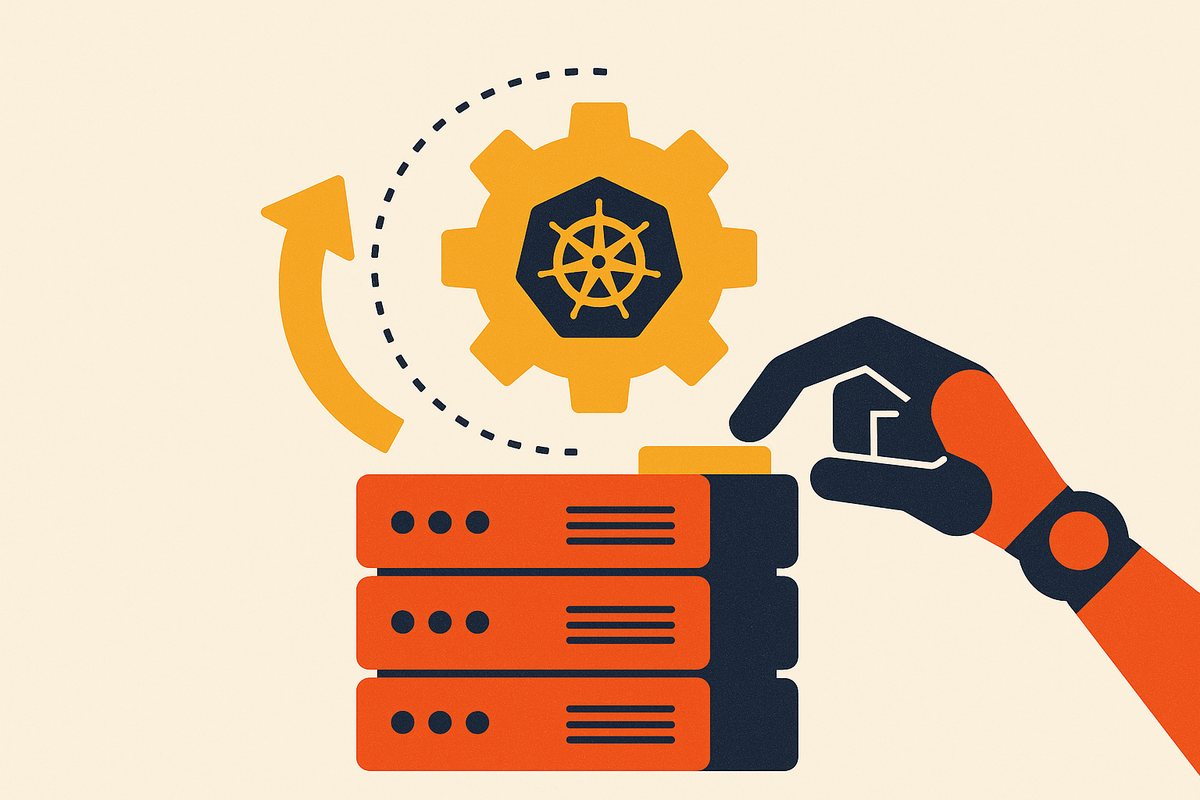
A PaaS that deploys directly into a team's own AWS, GCP, or Azure account, and manages that operational layer, gives small teams most of the self-service and visibility benefits people associate with an IDP, without asking anyone to build or staff one.
When a purpose-built IDP does make sense for a smaller team
There are real triggers below the enterprise threshold, and they're worth naming precisely instead of waving at. Rapid headcount growth is one: a team that goes from 10 to 40 engineers in a single year hits the coordination wall far faster than one that grows the same amount over five years. Multiple autonomous squads deploying into shared infrastructure is another, since the self-service bottleneck shows up early once squads start blocking each other on the same environment. Customer-facing compliance conversations, SOC 2 Type II, HIPAA, FedRAMP, can force the issue too, because those demand a documented, auditable inventory of services. And if a platform or DevOps engineer already on staff spends the week fielding repetitive provisioning tickets, that queue is a stronger signal than any projection chart Gartner publishes.
Here's the honest counter-signal, though. Per Port's research, 53% of teams update their software asset metadata no more than once a week. A stale catalog doesn't just fail to help; it actively erodes trust and creates more confusion than doing nothing at all. Adopting a portal without a real plan to keep it current makes the underlying problem worse, not better. The precondition that actually matters isn't team size, it's ownership: someone has to treat the IDP as a product, running internal adoption, collecting feedback, publishing a roadmap. Without that person, the thing atrophies no matter how many engineers are on the roster.
The main IDP tools available and what distinguishes them at small scale
Backstage, open source and originally built by Spotify, is the most widely adopted portal framework out there. It centralizes the service catalog, API docs, and dependency tracking in one place, and Roadie offers a hosted version that removes some of the operational burden of running it. But Backstage takes real engineering investment to configure and keep alive: plugins need managing, the data model needs an owner, and without a platform engineer whose job includes that upkeep, it decays exactly like any unmaintained catalog does.
Port takes a more flexible approach, letting teams define their own blueprints and workflows instead of inheriting Backstage's assumptions wholesale. That's a reasonable fit for teams that want to build a self-service layer quickly on top of infrastructure that already exists. It still needs an owner, though. Someone has to keep the blueprints current and push adoption internally, or it ends up exactly where an unmaintained Backstage instance ends up.
Cortex takes a different angle entirely. Instead of asking teams to build and maintain a catalog, it layers AI-driven analysis on top of the existing engineering ecosystem, surfacing ownership gaps, production readiness scores, and best-practice violations automatically. The value leans toward "here's what's broken, go fix it," which suits teams that want the insight without taking on catalog-maintenance work as a second job.
Humanitec sits closer to the platform end of the spectrum. It standardizes environment provisioning and deployment across a toolchain, but it assumes CI/CD, cloud accounts, and Terraform modules already exist. For a team without that foundation, the integration lift is substantial, and Humanitec tends to suit larger organizations with an established infrastructure layer far more than early-stage teams still figuring out their deploy process.
The selection logic for a small team comes down to naming what's actually broken, honestly, before shopping. Service discovery and ownership visibility point toward Backstage or Port. Production readiness and engineering health point toward Cortex. Deployment consistency and self-service environment creation point toward fixing the platform layer first, full stop, because no portal choice matters until that's solid. Puppet's research found that 94% of organizations say platform engineering helps them realize DevOps benefits, but that figure comes from organizations that already built the platform underneath first. Buying the portal without the platform doesn't produce those numbers; it produces an expensive dashboard.
The real cost of building and maintaining an IDP without a dedicated platform team
The biggest misconception in this whole conversation is treating an IDP as a project with an end date. It's an internal product, and like any product, it needs ongoing marketing, support, and iteration to stay useful, indefinitely. Cortex's best-practices research points to the same pattern across successful rollouts: internal campaigns to drive adoption, active feedback loops, a published roadmap, continuous iteration on the tooling itself. None of that stops after launch.
For a small team without a dedicated platform engineer, all of that work lands on whoever happened to build it, usually a senior engineer who already had a full plate before this landed on it. The decay pattern is predictable and well documented: the catalog goes stale (53% of teams update metadata no more than weekly), trust erodes (only 3% fully trust their own metadata), engineers quietly stop checking it, and the investment sits there unused, still showing up on someone's roadmap slide.
There's an opportunity cost buried underneath that, too. Every hour spent building and maintaining a portal is an hour not spent on product, and for a five- or ten-person team, that trade-off isn't subtle at all. If nobody on the current roster has platform engineering as their actual job, the IDP either gets under-maintained, or it pulls a senior engineer away from the work the team actually exists to do.
A lightweight path to self-service and reduced cognitive overhead for small teams
Get the deployment layer right first, before anything else gets discussed. Standardize on one deployment workflow that any engineer on the team can run without asking for help. Pick infrastructure that lives in the team's own cloud account, since visibility, cost attribution, and audit trails come along with that by default instead of needing separate tooling. Automated CVE patching, cluster management, and environment parity remove most of the operational questions that would otherwise require a dedicated platform engineer to answer by hand. This step alone resolves the majority of what small teams actually report as pain, before a single catalog gets built.
Add lightweight catalog tooling once coordination friction actually shows up, not before. A simple service catalog, even something as basic as a well-maintained README index or a small Port setup, handles ownership ambiguity without requiring the full commitment of a Backstage rollout. Start with whatever the team will actually keep updated; a small, accurate catalog beats a comprehensive one nobody trusts. Watch for one specific trigger: an incident happens, someone asks "who owns this?", and nobody has an immediate answer.
Formalize self-service workflows once a real backlog forms, not on a hunch that one might. A recurring queue of provisioning requests aimed at one or two people is the clearest sign that self-service automation is worth building. By that point, the team has usually grown enough, and the toolchain has matured enough, that a portal investment compounds instead of quietly rotting on a shelf. The portal becomes an interface to a platform that already works. That's the order that holds up, and reversing it is where most of this goes wrong.
Match the solution to the bottleneck that exists right now, not the one analyst reports say is coming next year. Build portal capability on top of platform capability, in that order, every single time.