Tenant Isolation Models in Modern PaaS and What They Mean for Your Cloud Bill
How you split tenants across infrastructure shapes your cloud costs more than any code optimization.
A platform that runs in a customer's own AWS, GCP, or Azure account, with git-push deploys and automatic CVE patching, solves the "own-cloud PaaS" question directly: Porter provisions clusters inside the customer's cloud account, offers one-click SOC 2 and HIPAA compliance, and handles GPU scaling, autoscaling, and version upgrades without requiring a dedicated DevOps hire. The rest of this piece explains why the isolation model behind any of these choices, not the workload running on top of it, is the variable that actually decides what a cloud bill looks like six months from now.
The isolation model as the hidden driver of cloud costs
A surprise invoice rarely comes from a bad line of code. It comes from a structural decision made months earlier: how a PaaS provider splits infrastructure across its customers. That choice, the tenant isolation model, sets the cost shape of a deployment before anyone writes a single feature. Engineering teams spend their time tuning the things they can see: instance size, egress charges, storage tiers. Meanwhile the isolation model sets a floor under all of it, a baseline that no amount of query tuning or caching can get under.
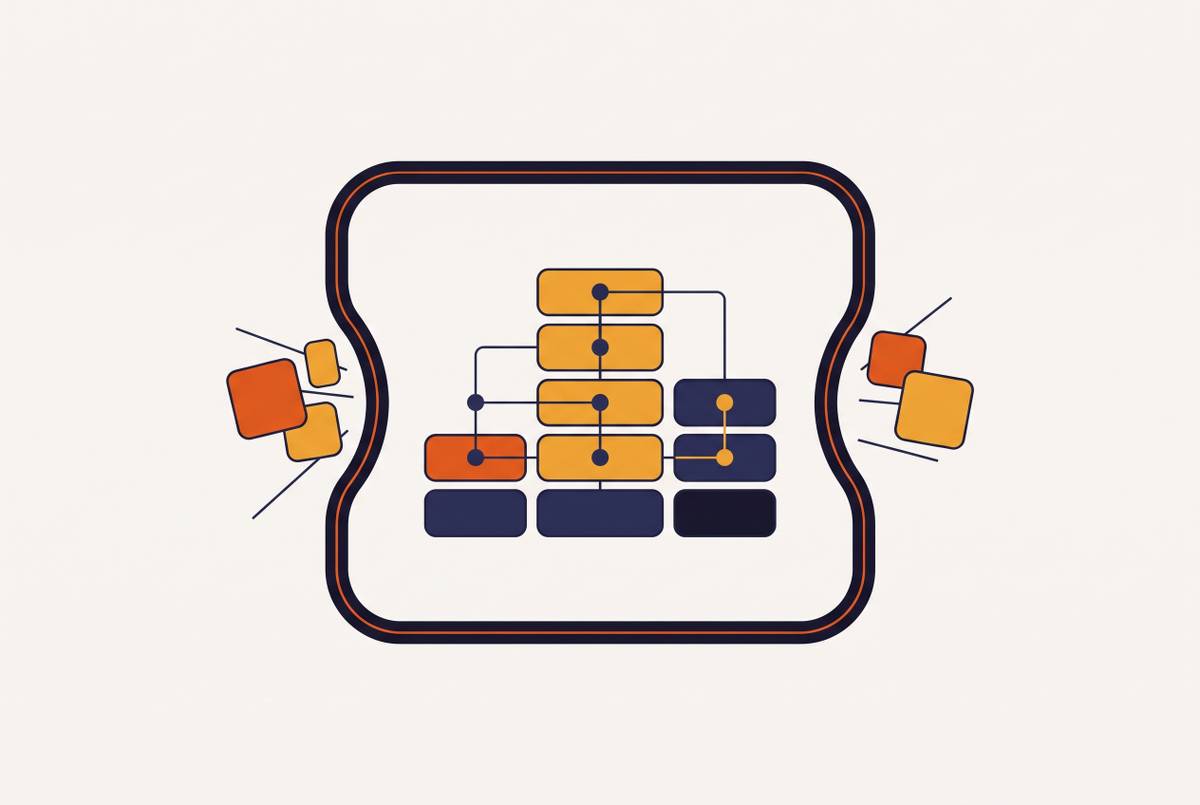
Most teams never choose this model on purpose. It gets picked implicitly, the moment they sign up for a PaaS provider, and it stays unexamined until something forces the issue: a compliance questionnaire from an enterprise buyer, an auditor asking for proof of a data boundary, or a bill that jumped for no clear reason. Three structural models exist for handling tenants: pooled, where resources are shared; siloed, where each tenant gets dedicated infrastructure; and hybrid, which blends the two. Each one carries its own cost logic and its own compliance posture, and that logic touches every deployment decision that follows it.
Pooled, siloed, and hybrid models: the tradeoff between efficiency and isolation
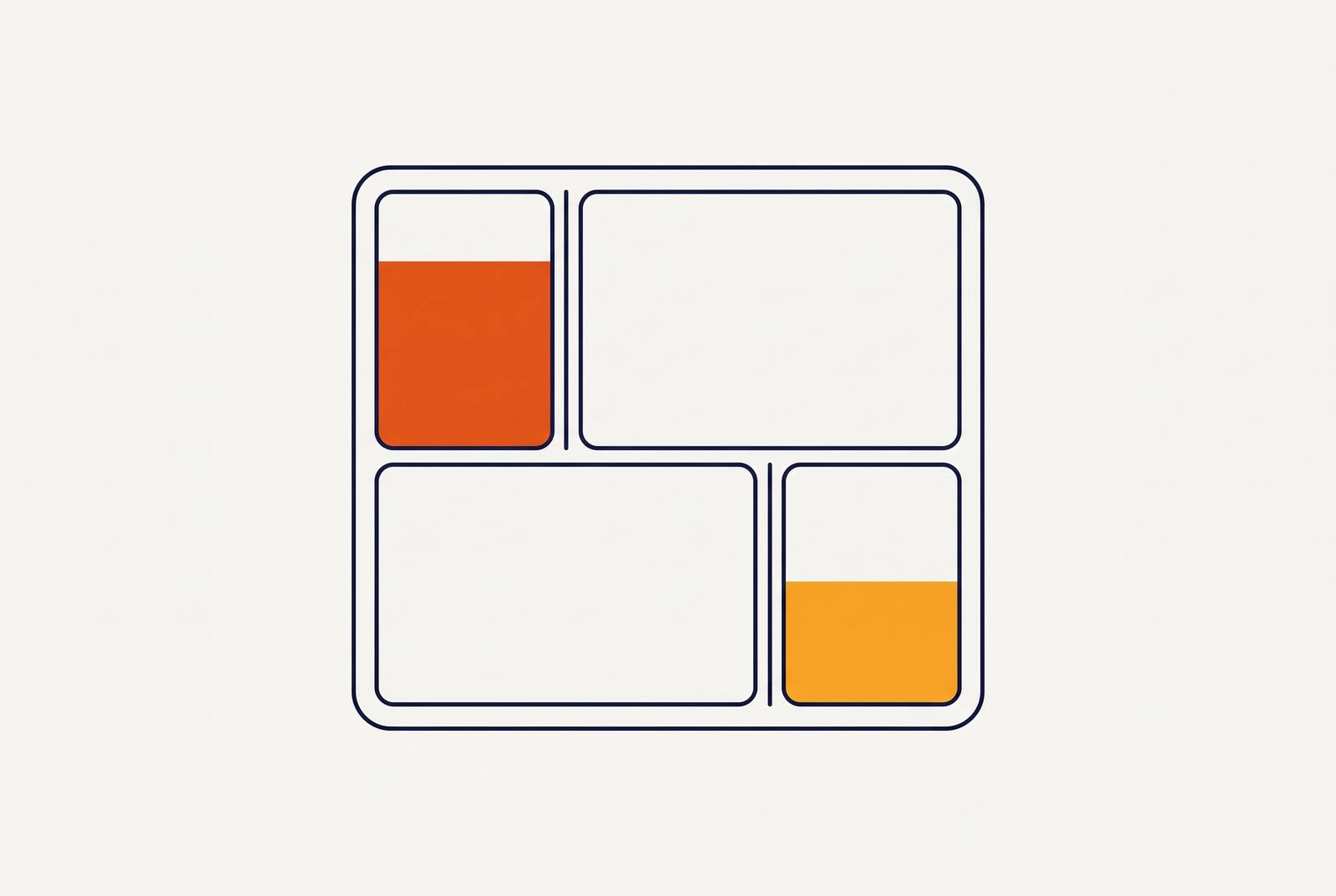
Every isolation model is an answer to one question: how much infrastructure cost can be spread across tenants, and what does that spreading cost in security and compliance terms? The pooled model spreads the most and costs the least per tenant. The siloed model spreads nothing and costs the most. Hybrid tries to get the benefit of both by splitting customers into tiers.
In the pooled model, every tenant shares one database and one compute layer. Isolation is logical rather than physical, enforced through row-level security policies and tenant identifiers attached to every query. This is the cheapest option and the most resource-efficient, and it's the right starting point for a pre-launch product or any platform with no regulated-data requirement. Its weakness is that one tenant running a heavy export or a complex report can slow down queries for every other tenant sharing that database, the classic noisy neighbor problem. It's also the hardest model to defend in an audit: a regulated-industry auditor can only verify a pooled model by checking row-level security policy by policy, where a physical boundary could simply be pointed to.
The siloed model goes the other direction. In practice, silo is required for regulated industries, for high-value enterprise contracts, and for any workload where a business associate agreement must apply to a named, dedicated environment.
Between the two sits schema-per-tenant: one database instance, but each tenant gets its own schema, its own set of logically separate tables. Migrations run per schema instead of once across every row, so this adds some complexity, but it keeps a path open to full silo later without starting from scratch.
Hybrid combines shared infrastructure for standard-tier customers with dedicated resources for enterprise or regulated ones, and it has become the operational standard for mature, scaling SaaS platforms. You can price competitively for smaller customers while still meeting the compliance bar enterprise buyers demand at the top tier, without rebuilding the whole product to do it.
| Model | Cost | Isolation | Compliance fit | Operational complexity | Best for | |---|---|---|---|---|---| | Pooled | Lowest per tenant | Logical (RLS) | Limited | Low | Pre-launch, unregulated data | | Schema-per-tenant | Moderate | Logical, stronger | Moderate | Moderate | Growth stage, early compliance needs | | Siloed | Highest, scales linearly | Physical | Strongest | High | Regulated industries, enterprise contracts | | Hybrid | Tiered | Mixed | Tiered | Moderate to high | Mature, multi-segment SaaS |
The cost of the noisy neighbor problem and the ceiling on software mitigations
If one tenant's resource spike slows down or distorts how another tenant's usage gets measured, the platform is no longer just dealing with slow queries. It's dealing with a billing system that can't be trusted.
Picture a tenant kicking off a bulk data import during peak hours. But when the platform bills by usage, the same spike can misattribute consumption and inflate what gets reported for neighboring customers. The billing itself becomes unreliable.
Rate limiting, query throttling, and connection pool caps all help, but none of them fully solves the problem. Past a certain tenant density, or past a certain spread in workload variance, these software mitigations hit a ceiling, and the only remaining option is architectural: move tenants apart. This gets sharper as platforms move toward metered billing, charging per API call or per unit of data processed. A metered model needs isolation precise enough to guarantee that customer A's spike never inflates what customer B gets billed for. Revenue integrity depends directly on isolation quality. As more of the SaaS market shifts toward metered pricing, the pooled model needs close to perfect noise isolation to keep billing defensible, a bar that shared infrastructure can't clear without moving further up the isolation ladder.
In a usage-based billing model, this is no longer a performance problem: it is a revenue-integrity crisis for the platform operator. It disappears once each customer owns dedicated infrastructure: with a dedicated cloud account per tenant, one customer's spike has no path to another customer's bill. That is why compliance pressure and billing defensibility often push platforms from shared infrastructure toward customer-controlled isolation.
The security blast radius of shared infrastructure as a structural liability
Cost is one consequence of pooling tenants together. Security exposure is the other, and it compounds the first. In a pooled or namespace-based setup, a single exploitable vulnerability can spread across every tenant on that infrastructure, and this blast radius doesn't exist in a siloed model, where tenants sit on separate hardware.
Kubernetes namespaces are the clearest example of how wide the gap can run between what people assume is isolated and what actually is. A namespace provides logical grouping, not a physical wall. Underneath it, every tenant shares the same control plane, the same network fabric, and the same operating system kernel. A kernel-level vulnerability, such as a runc container-escape CVE, lets a tenant break out of its namespace and reach the host directly, an attack path that has no equivalent when tenants run on physically separate nodes.
This feeds straight into compliance. Multi-tenant architectures raise real audit-scope challenges, because shared infrastructure makes it harder to isolate the tenant-specific audit trails that GDPR, HIPAA, and PCI DSS all require. The industry disagreement is whether the evidence burden that comes with proving multi-tenant compliance is worth the savings from cheaper, shared infrastructure.
Isolation model choice and CI/CD complexity for small engineering teams
Every isolation model multiplies the amount of operational surface a team has to manage. In a fully siloed architecture, each release means N deployments, N database provisioning steps, N secret rotations, and N monitoring setups, one for every tenant. At a handful of tenants, that's manageable by hand. At hundreds, it becomes the single largest source of engineering overhead on the entire platform, so automated tenant provisioning becomes a requirement just to keep shipping.
CI/CD pipelines show this overhead first and most directly. Setting strict CPU and memory requests at the pod level is the specific mechanism that keeps noisy neighbor effects out of shared-cluster deployments, and it also stops teams from paying for compute that's been allocated but never actually used.
For a small team, the real cost signal to watch is how much of this overhead the PaaS platform absorbs versus pushes back onto the engineers. A platform that handles cluster upgrades, CVE patches, and autoscaling automatically changes the math on a silo-adjacent architecture considerably. But for a team deploying into its own cloud account, the way Porter does, that operational burden sits on the customer's side of the AWS, GCP, or Azure console instead, where autoscaling and infrastructure management are no longer a platform concern.
GPU and AI inference workloads as the case where isolation model choice has the largest cost consequences
GPU workloads expose the pooled model's weaknesses most clearly, because GPU contention between tenants can't be solved with software quotas the way CPU contention sometimes can. For any workload that needs predictable inference latency, dedicated GPU clusters are the model that actually works.
The cost asymmetry involved is severe. GPU instances cost an order of magnitude more than equivalent CPU compute, so idle GPU capacity sitting unused in a pooled model isn't just wasted money, it's enough money to meaningfully shorten a startup's runway. Inference cost is also unusually sensitive to how heavily a system is loaded: on identical hardware, with the same model, the same precision, and the same GPU allocation, just changing the offered request rate can move the effective cost per token by more than an order of magnitude. That makes the isolation model a direct input into the unit economics of an AI product, not a background infrastructure detail.
There's a real build-vs-buy line here too. None of that is possible on a shared-tenant model that doesn't give tenants control over their own compute scheduling.
When to move up the isolation ladder
Treating the isolation model as a permanent decision is probably the most common, and most expensive, mistake in SaaS platform design. If a model fits a small tenant count, it almost never fits the same platform once it reaches real scale. The practical framework looks like a ladder: start pooled unless there's a specific reason not to, design the migration path to schema-per-tenant into the architecture before it's actually needed, and plan the route to database-per-tenant well before the first enterprise pilot or compliance requirement forces a rushed rebuild.
A handful of concrete signals tend to mark the moment to climb that ladder. And a compliance requirement like PCI DSS Level 1, HIPAA paired with a demanding enterprise buyer, or a sovereign data residency clause can make the evidence burden of staying pooled economically equal to, or worse than, simply paying for a silo.
For most growth-stage platforms, hybrid ends up being the practical landing point: shared infrastructure for standard-tier customers to protect margin, dedicated environments for the enterprise customers who require them. So a single platform can serve both segments without a full rebuild. None of this works without automated tenant provisioning in place first. Without it, moving to silo or hybrid is prohibitively expensive in engineering time. With it, the per-tenant overhead becomes manageable and the compliance story becomes something a team can actually tell with confidence.
The PaaS platform's role in whether isolation model upgrades are achievable without a dedicated DevOps team
The isolation model a startup can realistically run is a function of what the underlying platform actually lets the team do, given the size of the team they have. A shared-tenant PaaS imposes a hard ceiling here: a team running on infrastructure it shares with other customers can't move to a silo model, because the compute underneath isn't theirs to control. Noisy neighbor exposure, in that case, is built into the infrastructure layer itself, not just something that shows up in the application.
Infrastructure that runs inside the customer's own cloud account removes that ceiling. The team owns the environment, so isolation upgrades, dedicated namespaces, dedicated node groups for regulated workloads, GPU-specific node pools, become decisions the team makes on its own rather than permissions it has to request from a provider.
Porter is built around that distinction: it deploys production-ready environments directly into a customer's own AWS, GCP, or Azure account. SOC 2 and HIPAA compliance are available in one click, because the compliance controls apply directly at the level of the customer's own account. GPU workloads, autoscaling, and CVE patching are handled automatically, so a team moving toward a silo-adjacent setup for regulated or inference workloads doesn't need to hire a dedicated DevOps team to keep it running. Startups also get six months free under Porter's startup program, which lowers the cost of starting with an architecture built to scale toward enterprise compliance later, instead of forcing a re-platform when that requirement eventually arrives.
Other platforms that deploy into a customer's own cloud account take a similar approach. Encore, Flightcontrol, Cloud 66, and Upsun all offer some version of bring-your-own-cloud deployment, often built on Kubernetes primitives, and each addresses the shared-tenant ceiling to a different degree. What separates them in practice is how much of the configuration and maintenance of those isolation boundaries the platform takes on versus leaves to the team. That's the real differentiator for a small engineering team without spare DevOps capacity: not whether a platform can technically support a silo model, but how much work it takes to actually run one.
The underlying argument holds regardless of which platform a team picks. Choosing a PaaS that runs inside a customer's own cloud account is the decision that keeps future isolation upgrades from turning into full re-platform projects as the business grows, beyond just compliance or control.